





Al-Sabah, Suleiman. “Molecular Pharmacology of the Incretin Receptors.” Medical principles and practice : international journal of the Kuwait University, Health Science Centre vol. 25 Suppl 1,Suppl 1 (2016): 15-21. doi.org/10.1159/000433437
Learning how to inject Wegovy correctly makes a real difference to your experience on treatment. This guide covers everything you need to know: how to use the Wegovy pen, where to inject, how to rotate injection sites, and what to do if something does not go to plan.
Whether you are starting for the first time or switching from another GLP-1 like Mounjaro, the steps below will walk you through the process safely and clearly.
Check your BMI today
Not sure where you stand? Calculate your BMI and find out what it means for you.
What is Wegovy?
Wegovy is a once-weekly prescription injection for weight management. It received approval for weight management in 2021 and became available in the UK in 2023. In 2024, its licence was extended to include cardiovascular risk reduction in adults with established cardiovascular disease.
It is prescribed alongside a reduced-calorie diet and regular physical activity.
The active ingredient is semaglutide, which is also found in Ozempic. It works by mimicking GLP-1, a hormone your body naturally releases after eating. This suppresses your appetite, slows digestion so you feel fuller for longer, and helps keep blood sugar levels stable.
If you would like to find out whether Wegovy may be suitable for you, you can complete our eligibility quiz.
Treatment management
Side effects, dose changes, storage questions. Sign up to our monthly newsletter "Your Monthly Dose", a two-minute read on the clinical updates and the news worth knowing.
By entering I agree to the Terms and Conditions.
How to use the Wegovy pen (0.25mg to 2.4mg)
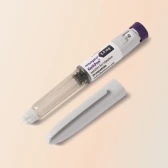
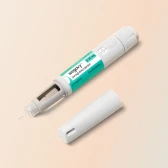
Wegovy is injected once weekly using a pre-filled pen. The steps below explain exactly how to use your pen safely.
Before using your pen for the first time, read the patient information leaflet supplied with your medication.
Note: These steps cover the Wegovy 0.25mg to 2.4mg pens. If you have been prescribed Wegovy 7.2mg, the pen is a single-use auto-injector that works differently. For full instructions, see our Wegovy 7.2mg guide.
Step 1: Wash your hands and check your pen
Wash your hands with soap and water.
- You have the correct pen and dose
- The pen has not expired
- The pen has not been frozen. If it has been frozen and thawed, do not use it.
- The solution inside is clear and colourless
Do not use the pen if the liquid appears cloudy or discoloured.
Tip: Take the pen out of the fridge around 30 minutes before injecting and let it come to room temperature. This can make the injection more comfortable.
Step 2: Attach the needle
- Remove the pen cap.
- Tear the paper tab from a new disposable needle. Push the needle straight onto the pen and turn until secure.
- Remove both the outer and inner needle caps. Keep the outer cap, as you will need it later.
Step 3: Flow check (first injection of each new pen only)
Before your first injection with each new pen, check the flow.
- Turn the dose selector to the flow symbol. Press and hold the dose button until the selector returns to zero. A drop of liquid should appear at the needle tip.
- If no drop appears, repeat once.
- If there is still no drop, change the needle and repeat the test.
- If a drop still does not appear, contact your clinical team.
You only need to perform this check before the first injection of each new pen.
Step 4: Select your dose
Turn the dose selector until the display shows your prescribed dose, such as 0.25 mg, 0.5 mg, 1 mg, 1.7 mg or 2.4 mg.
Step 5: Inject your dose
- Insert the needle into your thigh, stomach, or upper arm.
- Press and hold the dose button until the selector reaches zero. When you see zero, count slowly to six to ensure the full dose is delivered.
- You may notice a small drop of liquid at the needle tip afterwards. This is normal. If there is more than a drop, the pen may have been removed too early.
- If you see a small amount of blood at the injection site after removing the pen, press lightly with a cotton ball or gauze. Do not rub. This is normal and not a cause for concern.
Step 6: Remove and dispose of the needle
- To avoid a needlestick injury, place the outer cap on a flat surface and scoop the needle into it rather than placing the cap directly onto the needle.
- Once capped, unscrew the needle and dispose of it in your sharps bin.
- Do not reuse needles.
- Replace the pen cap after each use.
What to do if your Wegovy pen is not working
If your Wegovy pen does not seem to be working correctly, here are the most common issues and what to do.
The pen is not clicking or the injection is not starting
Wind the dose selector back to zero, then remove the needle and check it for bends, particularly the inner section that passes through the seal. If it looks straight, reattach it firmly and try again. If it looks bent, discard it and use a fresh needle, making sure it goes on straight and tight. If the pen still does not work, do not attempt a second injection. Contact your provider.
No drop appears during the flow check
The flow check is only needed before the very first injection of each new pen. If no drop appears, repeat up to six times. If there is still no drop, replace the needle and try again. Do not repeat the flow check before your second, third, or fourth injection as this can empty the pen before all four doses are used.
I forgot to prime my Wegovy pen before injecting
If you skipped the flow check before your first injection, do not go back and prime mid-pen. This can release a large amount of liquid and empty the pen before all four doses are used. Continue with your remaining injections as normal.
The dose counter is not reaching zero
Wind the dose selector back to zero first to release any pressure inside the pen. Then check the needle for blockages or damage and replace it if needed.
The dose selector is stuck
Do not force it. The needle may not be attached correctly. Try unscrewing it and attaching a fresh needle. Or the pen may be empty. Check the clear window to see if the plunger has reached the bottom.
There is not enough medication left for a full dose
If there is a partial dose left in your current pen, do not top up from a second pen to complete it. This is unsafe, makes it hard to manage your correct dose, and wastes medication. Start a new pen for the full dose instead.
For any questions about your pen, dose, or side effects, contact your provider or message the clinical team on the Voy app.
How to store Wegovy
Wegovy pens should be stored correctly to maintain effectiveness and safety.
- Keep unused pens in the fridge between 2°C to 8°C (36°F to 46°F).
- After first use, the pen can be stored below 30°C for up to 6 weeks.
- Do not freeze the pen.
- Keep the pen in the original packaging away from direct sunlight.
Storage for the Wegovy 7.2mg pen is different. For full storage guidance, see our Wegovy 7.2mg guide.
Where to inject Wegovy: injection sites explained
Wegovy is a subcutaneous injection, meaning it is injected under the skin. The best places to inject Wegovy are:
Abdomen
The stomach area, avoiding a 5 cm radius around the belly button.
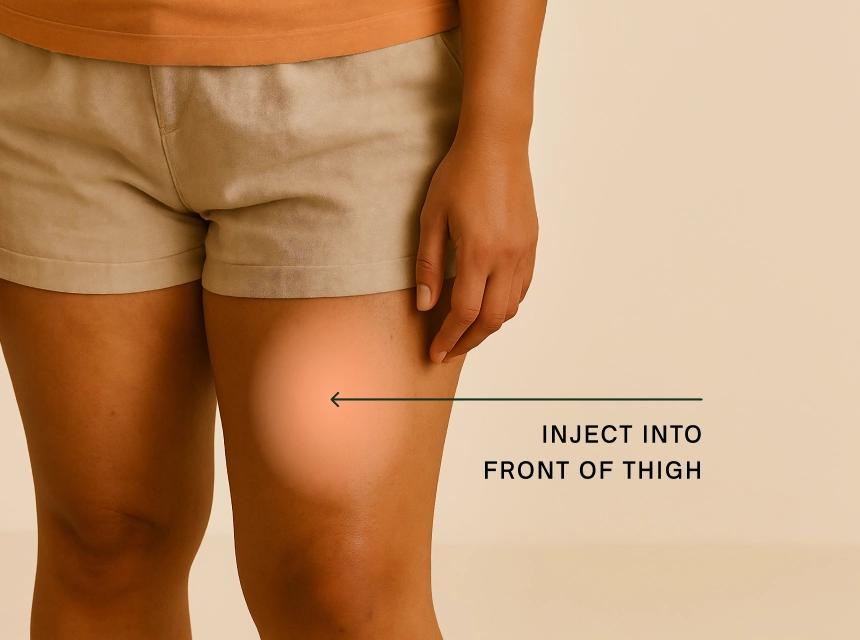
Thighs
The upper front or outer part of the thighs.
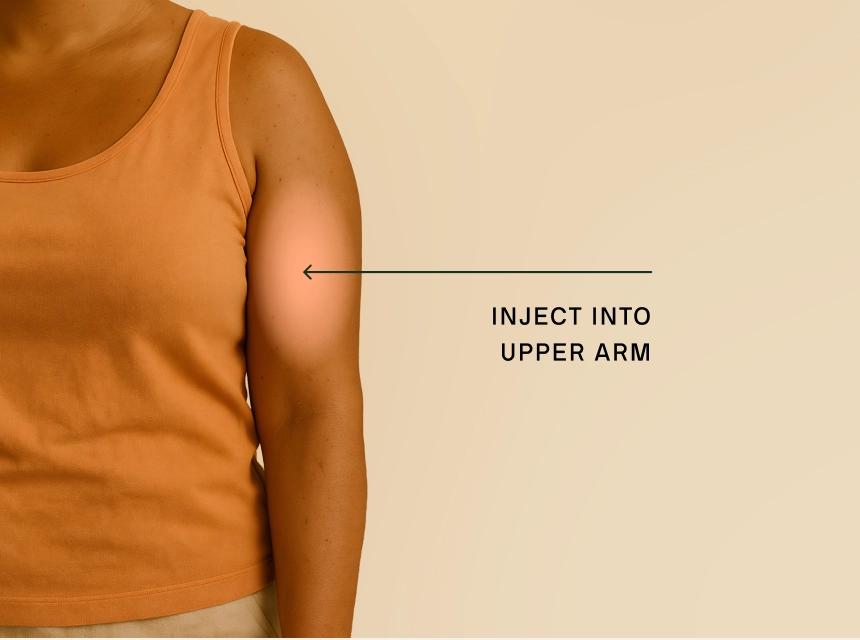
Upper arms
The back or outer area of the upper arm.
Rotate injection sites weekly and avoid skin that is bruised, red, scarred, or tender. Injecting repeatedly into the same spot can cause fat build-up under the skin (lipohypertrophy), which can affect how well the medication is absorbed. You may use the same general area, but avoid injecting into the exact same spot.
What is the best place to inject Wegovy in the UK?
There is no single best site. It comes down to personal preference and comfort. The abdomen is often the easiest place to self-administer a Wegovy injection, but the upper thigh is a good alternative. The upper arm is harder to reach for self-injection and may be easier with help from another person.
The injection site you choose should not influence side effects such as nausea, constipation, or diarrhoea, as these are related to the medication itself rather than where you inject.
Discover Wegovy
Struggling to reach your target weight? You’re not alone. Find out about how medications like Wegovy can boost your efforts and get you closer to your health goals.
Science backed treatment
Clinical support
Trusted by 100,000 UK customers
What’s the best time of day to inject Wegovy?
There’s no “best” time of day to inject Wegovy, but it is important not to miss a dose, so getting into a routine each week will help.
Choose a time that fits your routine and when you won’t feel rushed. Wegovy can be taken before or after food. Setting a weekly reminder can help you stay consistent.
What happens if you miss a dose of Wegovy?
If you miss a dose and it has been five days or less since your scheduled injection, take the missed dose as soon as you remember. Then inject your next dose seven days later. This becomes your new weekly injection day.
If more than five days have passed, skip the missed dose and take your next dose on your usual scheduled day. Do not take a double dose to make up for a forgotten dose.
Disposing of your Wegovy pen safely
Always dispose of your needle immediately after each injection using your sharps bin. Never store your pen with the needle still attached. Keep your sharps bin somewhere safe, out of sight and reach of children.
Once you have finished all four doses in a pen, you can recycle the empty pen through the free PenCycle scheme, which is specifically designed for returning used Wegovy pens. Alternatively, you can take the empty pen (with no needle attached) to your local pharmacy for disposal.
When your sharps bin is full
Arrangements for disposing of full sharps bins vary depending on where you live. You can find out more from your local council's website. Most councils provide this service free of charge.
You can also:
- Contact your GP surgery to ask whether they accept full sharps bins
- Contact your local A&E department
- Check whether a local needle exchange pharmacy offers disposal services
Wegovy side effects
Some people experience side effects when starting Wegovy or increasing their dose. These are usually mild and tend to improve as your body adjusts.
The most common side effects include:
- Headache
- Feeling sick (nausea)
- Being sick (vomiting)
- Diarrhoea
- Constipation
- Stomach pain
- Feeling weak or tired
Some other common side effects include:
- Feeling dizzy
- Upset stomach, indigestion, acid reflux or heartburn
- Burping and flatulence
- Stomach bloating
- Gallstones
- Hair loss
- Injection site reactions
- Change in the way food or drink tastes
- Low blood sugar in people with diabetes
If you’re concerned about any side effects you’re experiencing, or notice any new unusual symptoms, speak to your healthcare provider.
Managing Wegovy side effects
Side effects are usually mild and manageable. Here's how to handle the most common ones:
Nausea: Eat smaller portions and eat slowly, avoid fatty, spicy, or rich foods, and avoid lying down after eating. Ginger or peppermint tea can also help settle your stomach.
Constipation: Increase fibre gradually and maintain regular movement where possible.
Diarrhoea: Stay well hydrated by drinking plenty of water. Stick to plain, easy-to-digest foods like pasta, potatoes, rice, and bananas, and reduce your fibre intake until symptoms settle.
You can take paracetamol, anti-sickness medication, and medications for constipation or diarrhoea alongside Wegovy, but check with your clinical team first.
Side effects support at Voy
"If you're using Voy and you experience any side effects, rest assured that our expert clinicians are just a message or phone call away. They can adjust your dose, prescribe medication to ease your symptoms, or simply offer reassurance.
Everyone responds differently to weight loss treatment and we'll help you find what feels right for you."

Your next steps
Feeling ready to take the next step in your Wegovy journey? Whether you’re ready to start your injections or still deciding whether Wegovy is the right medication for you, our team of clinicians are here to help. Voy's weight loss treatment helped Amy lose three dress sizes. Check out her Wegovy before and after story.
Want to know more about whether Wegovy could help you with weight loss? Take our quiz to see if you’re eligible.
DisclaimerAt Voy, we ensure that everything you read in our blog is medically reviewed and approved. However, the information provided is not meant to replace professional medical advice, diagnosis, or treatment. It should not be relied upon for specific medical advice.
References

Ard, J., Fitch, A., Fruh, S. et al. “Weight Loss and Maintenance Related to the Mechanism of Action of Glucagon-Like Peptide 1 Receptor Agonists.” Adv Ther 38, 2821–2839 (2021). https://doi.org/10.1007/s12325-021-01710-0
Hirsch, Laurence J, and Kenneth W Strauss. “The Injection Technique Factor: What You Don't Know or Teach Can Make a Difference.” Clinical Diabetes: A Publication of the American Diabetes Association vol. 37,3 (2019): 227-233. doi:10.2337/cd18-0076