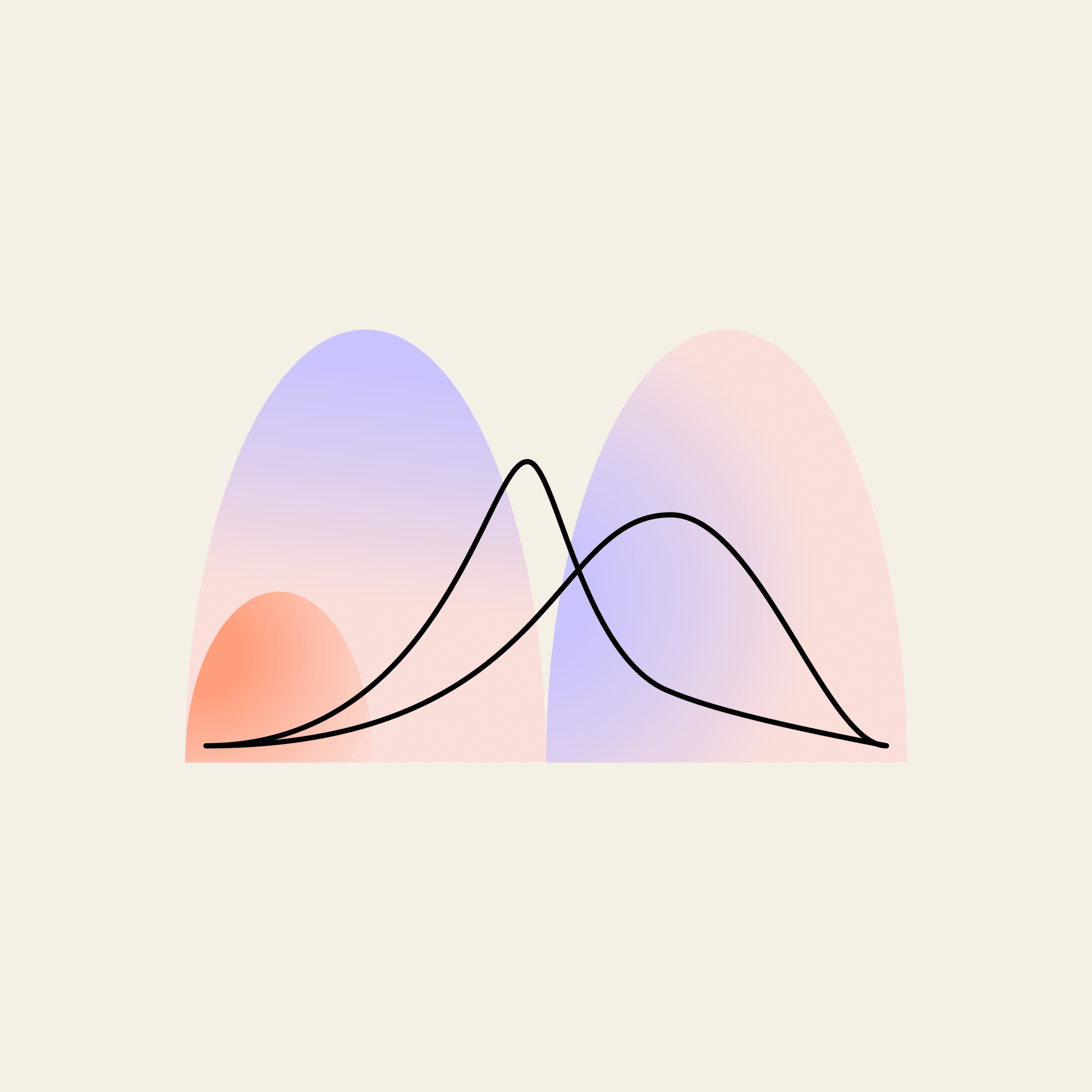



















Collaborative Group on Hormonal Factors in Breast Cancer. Type and timing of menopausal hormone therapy and breast cancer risk: individual participant meta-analysis of the worldwide epidemiological evidence. The Lancet, 2019. https://www.thelancet.com/journals/lancet/article/PIIS0140-6736(19)31709-X/fulltext
Key takeaways
- For most women, the benefits of HRT far outweigh the risks.
- NICE updated its guidance in 2024 to state that HRT is "unlikely to increase or decrease overall life expectancy."
- The type of HRT matters. Risks vary depending on how you take it (by mouth, through the skin or vaginal) and what hormones it contains (oestrogen, progesterone or testosterone).
- HRT decisions should be made individually. Your age, your symptoms, your medical history, and when you start treatment all affect the benefit-risk balance.

Why so many women are confused about HRT
The fear around HRT traces back to a single study published in 2002. The Women's Health Initiative (WHI) trial reported increased rates of breast cancer, heart disease, and stroke among women taking combined HRT, and the media increased fears around this.. Prescriptions dropped dramatically overnight. Many women stopped treatment abruptly, and a generation of doctors became cautious about offering it.
The problem is that the WHI study had significant limitations that took years to untangle. The participants were predominantly older women (average age 63) who were well past the typical window for starting HRT, many of whom had pre-existing cardiovascular risk factors, and they were taking an older style of HRT (oral oestrogen with or without a synthetic progesterone). The findings were not representative of the women most likely to be prescribed HRT today: those in their 40s and 50s, starting body identical HRT in perimenopause or close to menopause.
Since 2002, a substantial body of research has reanalysed the evidence. The picture that has emerged is more nuanced, and considerably more reassuring for most women.
What are the benefits of HRT?
HRT is the most effective treatment available for the symptoms of menopause and perimenopause. The evidence for symptom relief is robust.
Vasomotor symptoms. Hot flushes and night sweats affect the majority of menopausal women and are the most consistently treated by HRT. For many women, the improvement is substantial.
Sleep. Disrupted sleep is one of the most common and most debilitating menopause symptoms. Among Voy members, 71% reported improved sleep after starting treatment (presented at The Menopause Society 2025, forthcoming in Climacteric).
Mood and emotional wellbeing. Low mood, anxiety, and irritability are driven in significant part by hormonal changes during menopause. 83% of Voy members reported improvement in mood and emotional symptoms (presented at The Menopause Society 2025, forthcoming in Climacteric). Separately, 93% reported improvement in overall quality of life.
Bone health. Oestrogen plays a central role in maintaining bone density. After menopause, bone loss accelerates, increasing the risk of osteoporosis and fracture. A 2025 systematic review published in Cureus found that HRT produces greater improvements in bone mineral density than exercise therapy alone, with reduced fracture risk at the hip and vertebrae.
Cardiovascular health. The relationship between HRT and heart health is more complex, but for women who start treatment within 10 years of menopause, research suggests it may offer cardiovascular benefit rather than harm. More on this in the section below.
Vaginal and urinary health. Vaginal dryness, discomfort during sex, and urinary symptoms are caused by falling oestrogen levels. HRT, and particularly vaginal oestrogen, can be highly effective at relieving these symptoms and is suitable for many women who cannot or do not wish to take systemic HRT.
HRT and breast cancer: what the evidence really says
This is the question that stops most women in their tracks, and it deserves a careful, honest answer.
Yes, some combined HRT types (oestrogen plus a synthetic progestogen) are associated with a small increased risk of breast cancer. The 2019 Lancet individual participant meta-analysis, the largest pooled analysis of its kind, estimated the absolute increase at approximately 2 percentage points for five years of combined HRT use starting at age 50. That translates to roughly one extra case per 50 users over five years.
That number matters. Relative risk figures ("35% increased risk") are technically accurate but strip away context that is essential for decision-making. One extra case per 50 users, in a population where breast cancer has a baseline risk, is very different from what most women imagine when they read "HRT increases breast cancer risk."
A few important distinctions:
Type of HRT matters significantly. Oestrogen-only HRT, taken by women who have had a hysterectomy, is associated with little or no increased breast cancer risk below five years of use, according to a large UK database study published in the BMJ in 2020. Combined HRT carries a higher signal than oestrogen-only.
The type of progestogen matters too. Research published in Medicina in 2019 found that the type of progestogen used in combined HRT influences the breast cancer risk signal. Micronised progesterone (referred to as "body-identical" progesterone, because it is structurally identical to the progesterone the body produces naturally) appears to carry a lower risk signal than older synthetic progestins. Some studies show no increased risk when micronised progesterone is used for up to 5 years. This is an active area of research, and the distinction is clinically meaningful.
Duration and timing affect risk. Risk increases with longer duration of use and persists for some years after stopping, according to the Lancet meta-analysis. This does not mean short-term HRT is without risk, but it does mean the picture is not static.
Protective effects elsewhere. HRT has been associated with a reduced risk of colorectal cancer. The Medicina review reported a hazard ratio of 0.61 for colorectal cancer in HRT users: a protective association, though observational data cannot establish causation.
Lifestyle forms the bigger picture. Smoking, body weight, healthy eating and activity levels are all highly influential in cancer risk, and may create more meaningful differences for women than the small effects of HRT.
The honest summary: breast cancer risk is real and should be part of any informed conversation about HRT. It is also more nuanced, and for many women more manageable, than the headlines suggest.
HRT and blood clots: does the route of delivery make a difference?
Oral HRT tablets (taken by mouth) are associated with a small increased risk of venous thromboembolism (VTE), the medical term for blood clots including deep vein thrombosis (DVT) and pulmonary embolism.
Transdermal HRT, meaning patches, gels, or sprays applied to the skin, delivers oestrogen directly into the bloodstream without passing through the liver first. Research reviewed in the European Heart Journal Open in 2026 found that the transdermal route does not appear to increase VTE risk in the way oral tablets do.
This distinction is clinically relevant for women with risk factors for blood clots, including those with a higher BMI, reduced mobility, or a personal or family history of VTE. It is one of the reasons the route of HRT delivery is an important part of any personalised treatment discussion, not a minor administrative detail.
HRT and heart health: the timing question
For years, the WHI findings led many to conclude that HRT was harmful to the heart. The picture is more complicated than that, and the population studied in the WHI matters enormously here.
A narrative review published in PMC in 2025 validated what researchers now call the "timing hypothesis": women who start HRT within 10 years of menopause, or before the age of 60, do not appear to face increased cardiovascular risk and may experience cardiovascular benefit. Women who start much later, after atherosclerotic plaques have already formed, may face a different risk profile.
The European Heart Journal Open review (2026) reinforced this: early initiation of HRT is consistently associated with cardiovascular benefit in the research; delayed initiation (starting HRT long after menopause) is the scenario where risks such as stroke and VTE are more likely to arise.
This is not a green light to assume HRT is always cardioprotective. Women with pre-existing cardiovascular disease, uncontrolled hypertension, or other significant risk factors need an individualised assessment. But for the majority of women starting HRT in their 40s or 50s, the cardiovascular picture is considerably more reassuring than the 2002 headlines implied.
HRT and dementia: an honest look at a complicated picture
The relationship between HRT and dementia is one of the most genuinely uncertain areas in menopause research, and it is important to be straightforward about that uncertainty.
Some observational studies have suggested that women who take HRT may have a lower risk of developing Alzheimer's disease. Others have reported associations in the opposite direction, particularly with longer use. The evidence is conflicting, the study designs vary significantly, and causation is difficult to establish.
NICE NG23, updated in 2024, is explicit on this point: HRT should not be offered for the purpose of dementia prevention. The guideline does not support using HRT as a preventive strategy for cognitive decline.
"What can be said: the oestrogen withdrawal that occurs during menopause can contribute to brain fog, difficulty concentrating, and memory lapses, and many women report meaningful improvement in these symptoms with HRT. That is symptom relief, not dementia prevention, and the distinction matters.”

Who should not take HRT?
HRT is not suitable for everyone, and certain medical histories require careful assessment before any treatment decision is made. However, nobody should be told a ‘flat no’ when asking for HRT - the benefits should be weighed up against risks, and the picture is more nuanced than a blanket exclusion.
Women who need to take extra care when considering HRT, or who may need specialist review before starting, include those with:
- A personal history of hormone-receptor-positive breast cancer (specialist input is essential)
- A personal history of blood clots (VTE), particularly if not associated with a clear temporary cause
- Untreated high blood pressure
- Active or recent liver disease
- Undiagnosed vaginal bleeding
A family history of breast cancer does not exclude you from HRT. The absolute risk increase discussed above applies at a population level; your individual risk depends on your specific family history, genetic factors, and the type of HRT being considered. This is precisely the kind of question a menopause specialist is equipped to work through with you.
If you have a history of cancer, your specialist will discuss all your options, including treatments that may still be suitable. NICE NG23 emphasises shared decision-making: the goal is an informed individual choice, not a blanket rule.
What the evidence actually shows: overall life expectancy
Perhaps the most important single statement in the current evidence base comes from NICE NG23, updated in 2024. After reviewing the totality of the evidence on risks and benefits, NICE concluded that HRT is "unlikely to increase or decrease overall life expectancy" for most women.
That is a significant statement. It reflects the fact that while some HRT types are associated with a small increased risk of some conditions (breast cancer in some formulations, blood clots with oral tablets), HRT is also associated with benefits across other domains: bone health, cardiovascular health in early users, symptom management, and quality of life. Across the whole picture, for most women, it balances out.
This does not mean risk disappears. It means that for the majority of women considering HRT for menopause symptoms, the decision should be driven by their individual symptoms, risk factors, and preferences, not by a generalised fear that HRT shortens life.
How to make the decision that's right for you
HRT is not a one-size-fits-all treatment, and neither is the decision about whether to take it. The research is clear that the type of HRT, the route of delivery, when you start, and how long you take it all affect the benefit-risk picture in ways that are specific to you.
That is why the quality of the conversation you have with a specialist matters as much as the evidence itself.
88% of Voy members felt more hormonally balanced at three months, compared to 62% receiving standard care (presented at The Menopause Society 2025, forthcoming in Climacteric). That difference is not accidental. It reflects what happens when treatment is tailored to the individual, not prescribed in a ten-minute appointment with a one-size-fits-all plan.
Voy's menopause consultations are 45 minutes with BMS (British Menopause Society) trained specialists: clinicians who spend their working lives in this field, who understand the evidence, and who have the time to go through your symptoms, your history, and your concerns properly.
If you've been sitting with questions about HRT for months, or years, a proper specialist conversation is where those questions get real answers.