


















Alvares Penha, Mariana, et al. “Oral Minoxidil vs Topical Minoxidil for Male Androgenetic Alopecia.” JAMA Dermatology, vol. 160, no. 6, 10 Apr. 2024, https://doi.org/10.1001/jamadermatol.2024.0284. Accessed 7 Nov. 2025.
Minoxidil is a treatment for hair loss that takes 8 to 12 weeks to start working with consistent use. Minoxidil and finasteride are the only two approved treatments for male pattern baldness (also known as androgenic alopecia). If you’ve heard of the brands Rogaine and Regaine, minoxidil is the main ingredient.
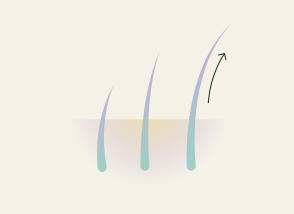
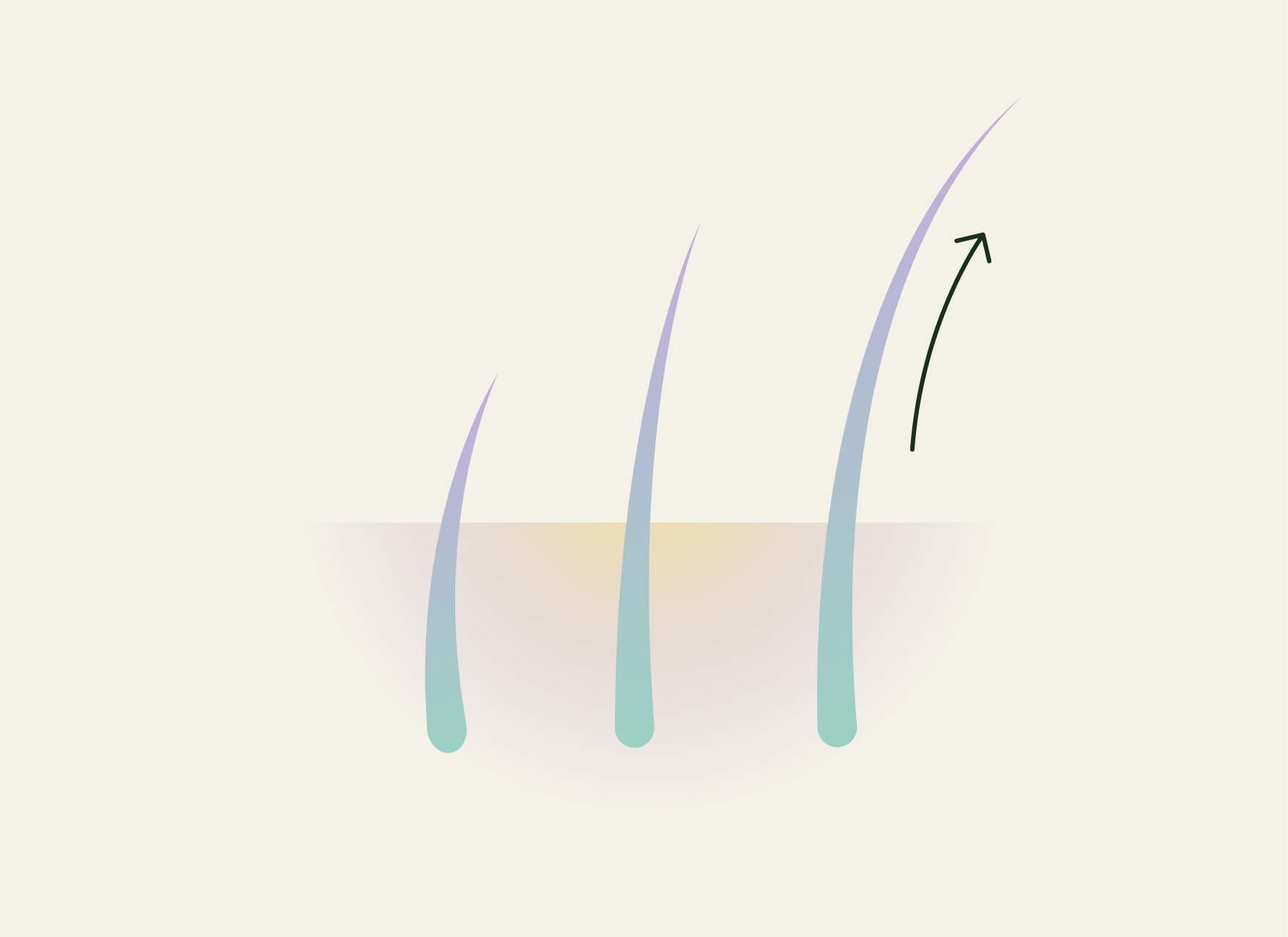
Minoxidil doesn’t create new follicles, it revives dormant ones. Originally developed to treat high blood pressure because it widens blood vessels, minoxidil can treat hair loss because it improves blood flow to your hair follicles. This means more nutrients and oxygen reach your scalp. In turn, your hair follicles are stimulated and healthy, so you have more regrowth.
Let’s break down how long it takes for minoxidil to work on this cycle of regrowth.
Key Takeaways
- Minoxidil is a treatment for hair loss that takes 8 to 12 weeks to start working with consistent use.
- If you continue your treatment plan, you’ll see consistently stronger regrowth.
- Increased hair shedding at the start is actually a good sign. It shows the medication is working by pushing out weaker hairs to make room for new, healthier growth.
- Combining minoxidil and finasteride can speed up hair growth.

Minoxidil timeline at a glance
If you want to see results more quickly with minoxidil, the key is to use it regularly. At first, you might wonder if it’s really working because there is usually an increase in hair shedding at first—but don’t panic, this is part of the process. Stay consistent, and it will pay off. Here’s what to expect:
Months 1 to 2: Possibility of more hair shedding. This means the treatment is actually stimulating new hair growth and pushing the old, weaker hairs out.
Months 3 to 4: Hair loss should slow down and you notice some regrowth with fine “vellus” hairs starting to appear.
Months 5 to 6: You start to see noticeable results, including more scalp coverage and thicker hair, with thinner areas beginning to fill in.
Months 9 to 12: If you continue your regular treatment plan, you’ll see consistently stronger regrowth, with thicker hair and improved texture.
How to tell minoxidil is working
You’ll be able to tell if minoxidil is working for you with a few key signs. Look out for:
- Initial shedding: Increased hair shedding at the start is actually a good sign. It shows the medication is working by pushing out weaker hairs to make room for new, healthier growth
- Reduced shedding: Fewer hairs in your shower drain, on your pillow, or in your brush as the shedding phase passes
- New growth: Short, fine hairs that appear along your hairline or crown that gradually get darker and thicker
- A disappearing scalp: Your scalp becomes less visible, especially around the crown or temples
It helps to take weekly or monthly photos to track your progress over time. Make sure to use the same mirror and lighting for the most accurate before-and-after photos. If you want to get even more precise, measure your part width with a ruler to monitor new growth.
How long does minoxidil take to work on your beard and eyebrows?
How long minoxidil works for beard and eyebrow growth can vary among users. Facial hair could respond more slowly or less predictably than scalp hair, which typically takes 6-12 months before you see noticeable changes.
Important: Minoxidil isn't licensed for beards or eyebrows, so don't apply it without speaking to a healthcare provider first. They'll need to review whether it's appropriate for you and may prescribe it off-label if they determine the potential benefits outweigh the risks.
Want to learn more about hair loss treatments?
Join a community of men who trust Voy. We'll share offers, break down different treatment options, and keep you updated on all things hair.
By entering I agree to the Terms and Conditions.
Using minoxidil with finasteride: Does it speed up results?
Combining minoxidil and finasteride can speed up hair growth. It's more effective than using either treatment alone because they work differently.
Minoxidil stimulates hair growth while finasteride blocks the enzyme 5-alpha reductase (5AR). This stops testosterone converting to dihydrotestosterone; the main hormone that causes hair loss.
When using minoxidil and finasteride together on Voy’s complete hair loss plan, most men notice improvements within six months.
You shouldn’t mix minoxidil with other hair treatments without expert guidance. Purchasing it through Voy gives you access to our clinical team who will help to monitor your plan and any side effects.
Discover hair loss treatments
Struggling with thinning hair or a receding hairline? Our exclusive, science-backed formulas are proven to slow down hair loss and help regrowth.
Trusted by over 500,000 men
Science-backed formulas you can’t get elsewhere
Effective in 9 out of 10 men using our combined approach
Practical tips to see results sooner
Your hair won’t grow back quicker if you use more than the intended dose of minoxidil, or use it more often than you should. So stick to the prescribed treatment plan to minimise side effects.
You can improve your minoxidil results with a few practical steps:
- Apply consistently, skipping applications slows your hair growth progress.
- Wait at least 4 hours before washing your hair or scalp to make sure it’s properly absorbed.
- Combine minoxidil with a DHT blocker like finasteride.
- Eat a balanced diet rich in protein, iron, biotin, zinc, and vitamin D for healthy hair growth. Hair vitamins may help fill any nutritional gaps.
- Chronic stress can cause hair loss. Regular exercise, mindfulness practices, and getting enough sleep can help to reduce stress.
- Using a hair loss shampoo for men can also help support scalp health alongside your treatment.
Ultimately, consistency matters more than any single tip, so stick with your routine for at least six months.
Get your confidence back
Take our short hair loss quiz to find out which treatment could work best for you and get a personalised action plan.