









Weight Loss
Menopause
menu-close
WHAT WE TREAT
Weight loss
icon
Menopause
icon
Preventive Health
Do health
Do health
Lifestyle programme powered by your biology and blood results
icon
ACCOUNT
Log in
icon
OVERVIEW
Weight loss overview
icon
TREATMENTS
Explore all options
Explore all options
icon
Mounjaro
Mounjaro
Lose up to 23% body weight
icon
Wegovy
Wegovy
Lose up to 21% body weight
icon
Saxenda
Saxenda
Lose up to 10% body weight
icon
Orlos
Orlos
Lose up to 8% body weight
icon
PROGRAMME
How it works
How it works
icon
App
App
icon
ABOUT
Results
icon
Experts
icon
RESOURCES
Guides & tips
icon
ACCOUNT
Log in
icon
GET IN TOUCH
020 3912 9885
Mon-Fri 9:00-17:30
icon
OUR CLINIC
Menopause overview
icon
Pricing
icon
Specialists
icon
TREATMENT PLANS
Hormone replacement therapy
icon
Testosterone treatment
icon
Cognitive behavioural therapy
icon
Vaginal treatments
icon
BLOOD TESTS
Women's midlife (MOT) blood test
icon
Check your HRT and testosterone test
icon
Start testosterone blood test
icon
WHAT WE TREAT
Skincare
New
icon
Perimenopause
icon
Menopause
icon
ADHD and menopause
icon
Premenstrual Dysphoric Disorder (PMDD)
icon
LEARN
Guides
icon
Treatments
icon
ACCOUNT
Log in
icon
SUPPORT
FAQ
icon
Hair loss

What helps hair growth in men?

Here’s what research shows actually boosts hair growth in men.

clinician image

Medically reviewed by

Dr Earim Chaudry (MBBS), Chief Medical Officer

iconPublished 18th December 2025

Noticing more hairs than normal on your pillow? You're far from alone. Hair loss affects around 80% of men at some point in their lives.

With countless products promising miraculous results, it's hard to know what actually works. We've cut through the noise to bring you the science-backed facts on what genuinely helps hair grow back.

Key Takeaways

  • Most hair loss is genetic and happens gradually with age
  • Proven medications like finasteride and minoxidil can prevent hair loss and stimulate regrowth
  • Diet supports healthy hair growth, and supplements are most useful for correcting deficiencies
  • Treatments like microneedling show promise, but should be done by a professional
  • Many products are marketed for hair growth, but few are backed by strong scientific evidence
Why does hair loss happen in men?

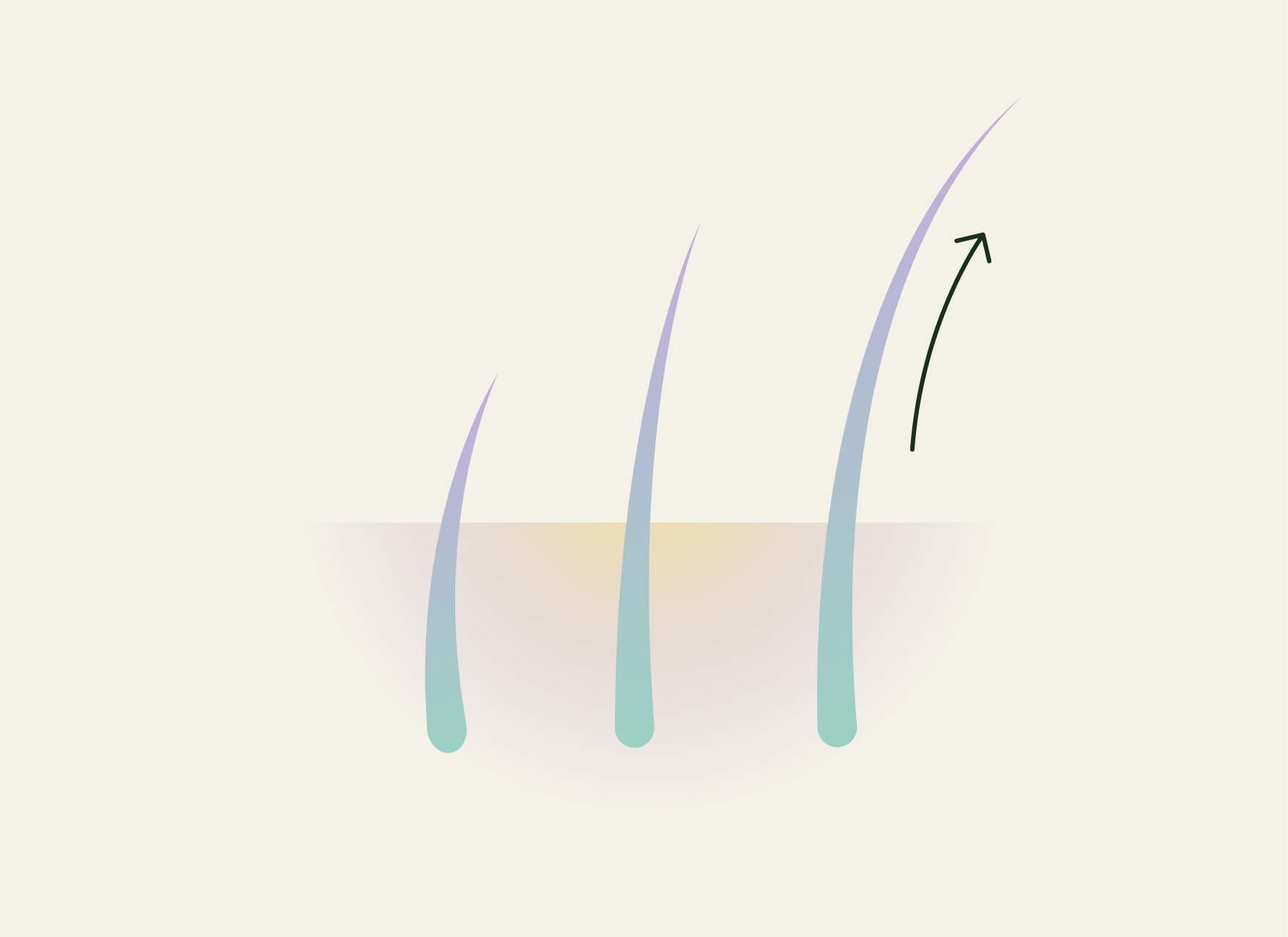
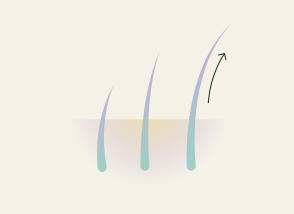
Most male hair loss is genetic. As you age, your hair follicles shrink and the growth phase gets shorter. Eventually, they stop producing new hairs altogether.

Sometimes hair loss is temporary (stress-related, for example) or caused by specific factors like harsh styling products or certain medications.

The good news? While your follicles are still functioning, there are proven ways to stimulate growth by:

  • Increasing blood flow to hair roots to extend the growth phase
  • Addressing the root cause of hair loss
  • Using medications that prevent follicles from shrinking

Do hair loss medications work?

Minoxidil and finasteride are the two clinically proven treatments for male pattern baldness. They’re effective for most men and can genuinely stimulate hair regrowth.

How they work:

  • Minoxidil boosts blood flow to your hair roots, helping follicles stay in the growth phase longer
  • Finasteride reduces DHT (dihydrotestosterone), the hormone that causes follicles to shrink over time

Both have strong clinical evidence backing them up.

Discover hair loss treatments
Struggling with thinning hair or a receding hairline? Our exclusive, science-backed formulas are proven to slow down hair loss and help regrowth.
icon
Trusted by over 500,000 men
icon
Science-backed formulas you can’t get elsewhere
icon
Effective in 9 out of 10 men using our combined approach

Can diet help with hair growth?

A balanced, nutritious diet keeps your hair healthy and strong. Deficiencies in certain nutrients have been linked to hair loss, including:

  • Protein
  • Iron
  • Zinc
  • Vitamin D
  • Omega-3 and omega-6 fatty acids

Meanwhile, vitamins A, B, C, D, E, along with iron, selenium, and zinc all support healthy hair growth.

Do supplements help hair growth?

The evidence is thin. While supplements are heavily marketed for hair growth, there's little scientific proof they work.

Your doctor may recommend iron or vitamin D supplements if blood tests show a deficiency. But for most people, a balanced diet provides everything your hair needs.

Do essential oils help hair growth?

There's one notable study on rosemary oil. In a 6-month trial of 100 men, rosemary oil performed similarly to minoxidil 2% in terms of hair count increase. The rosemary oil group also experienced less scalp itching.

However, this evidence is limited. The study used minoxidil 2%, which is a lower concentration than the standard 5% or 10% that some providers prescribe off-label. We'd need larger studies comparing rosemary oil with these higher-strength formulations to draw firmer conclusions.

Other essential oils like lavender and peppermint have shown potential in small studies and animal research, but there's insufficient data to recommend them.

The bottom line: Essential oils aren't first-line treatments for hair loss, but rosemary oil may be worth discussing with your provider as a complementary approach alongside proven treatments.

Does microneedling work for hair growth?

Yes, there's promising evidence that microneedling can boost follicle stimulation in men with hair loss.

Important: Don't attempt this at home. Book an appointment with a qualified clinician who can perform the treatment safely and effectively.

What helps beard growth in men?

Research on beard growth is limited, but based on what we know about hair growth generally, these may help:

  • Microneedling performed by a professional
  • Eating a balanced diet rich in hair-supporting nutrients
  • Minoxidil (though it's not licensed for beard growth and needs more research)
Ready to regain your confidence?
Take the hair quiz today and we’ll recommend a treatment plan designed to stop hair loss and power regrowth.

When should you see a doctor about hair growth problems?

Worrying about your hair loss is reason enough to book an appointment.

You should definitely see a doctor if:

  • Your hair loss is sudden or severe
  • Hair is coming out in clumps or patches
  • You have other symptoms like burning, itching, or scalp pain
  • You notice redness or scaling on your scalp

These could indicate an infection, autoimmune condition, or other underlying health issue.

Get your confidence back

Evidence-based hair loss treatments are available at MANUAL. Start your consultation today to find the right solution for you.
FAQ

What helps hair growth in men? FAQ

DisclaimerAt MANUAL, we ensure that everything you read in the Health Centre is medically reviewed and approved. However, the information provided is not meant to replace professional medical advice, diagnosis, or treatment. It should not be relied upon for specific medical advice.
References
icon¹

Almohanna, Hind M., et al. “The Role of Vitamins and Minerals in Hair Loss: A Review,” Dermatology and Therapyscribble-underline, vol. 9, issue 1, 2018:51-70 https://pmc.ncbi.nlm.nih.gov/articles/PMC6380979/#Sec1.

icon²

Dhurat, Rachita, and Mathapati, Sukesh. “Response to Microneedling Treatment in Men with Androgenetic Alopecia who Failed to Respond to Conventional Therapy,” Indian Journal of Dermatologyscribble-underline, vol. 60, issue 3, 2015:260-263. https://pmc.ncbi.nlm.nih.gov/articles/PMC4458936/.

icon³

Ezekwe, Nneamaka, et al. “The Use of Natural Ingredients in the Treatment of Alopecias with an Emphasis on Central Centrifugal Cicatricial Alopecia: A Systematic Review,” Journal of Clinical and Aesthetic Dermatology,scribble-underline vol. 13, issue 8, 2020:23-27 https://pmc.ncbi.nlm.nih.gov/articles/PMC7595365/.

icon⁴

Guo, Emily L., and Katta, Rajani. “Diet and hair loss: Effects of Nutrient Deficiency and Supplement Use,” Dermatology Practical and Conceptualscribble-underline, vol. 7, issue 1, 2017:1-10 https://pmc.ncbi.nlm.nih.gov/articles/PMC5315033/.

icon⁵

Gupta, Aditya, et al. “Relative Efficacy of Minoxidil and the 5-α Reductase Inhibitors in Androgenic Alopecia Treatment of Male Patients, A Network Meta-analysis,” JAMA Dermatologyscribble-underline, vol. 158, no. 3, 2022:266-274 https://pmc.ncbi.nlm.nih.gov/articles/PMC8811710/.

icon⁶

Hu, Ruiming, et al. “Combined Treatment with Oral Finasteride and Topical Minoxidil in Male Androgenetic Alopecia: A Randomized and Comparative Study in Chinese Patients,” Dermatologic Therapyscribble-underline, vol. 28, issue 5, 2015:303-308 https://onlinelibrary.wiley.com/doi/abs/10.1111/dth.12246.

icon⁷

Ingprasert, Sittichai, et al. “Efficacy and Safety of Minoxidil 3% Lotion for Beard Enhancement: A randomized, Double-masked, Placebo-controlled Study,” The Journal of Dermatologyscribble-underline, vol. 43, issue 8, 2016:968-969. https://pubmed.ncbi.nlm.nih.gov/26893270/.

icon⁸

“Male Pattern Hair Loss (Male Androgenic Alopecia): How Common is Male Pattern Hair Loss?” National Institute for Health and Care Excellencscribble-underlinee, 2022 https://cks.nice.org.uk/topics/male-pattern-hair-loss-male-androgenetic-alopecia/background-information/prevalence/. Accessed 4 Dec. 2025.

icon⁹

Oh, Ji Young, et al. “Peppermint Oil Promotes Hair Growth Without Toxic Signs,” Toxicological Researchscribble-underline, vol. 30, issue 4, 2014:297-304 https://pmc.ncbi.nlm.nih.gov/articles/PMC4289931/.

icon¹⁰

Olsen, Elise A., et al. “Global Photographic Assessment of Men Aged 18 to 60 Years with Male Pattern Hair Loss Receiving Finasteride 1mg or Placebo,” Journal of the American Academy of Dermatologyscribble-underline, vol. 67, issue 3, 2012:379-386 https://www.jaad.org/article/S0190-9622(11)01184-4/abstract.

icon¹¹

Panahi, Yunes, et al. “Rosemary Oil vs Minoxidil 2% for the Treatment of Androgenetic Alopecia: A Randomized Comparative Trial,” Skinmedscribble-underline, vol. 13, issue 1, 2015:15-21 https://pubmed.ncbi.nlm.nih.gov/25842469/.

icon¹²

“Vitamins, Minerals, and Hair Loss: Is There a Connection?,” Harvard Health Publishing. scribble-underlinehttps://www.health.harvard.edu/diseases-and-conditions/vitamins-minerals-and-hair-loss-is-there-a-connection. Accessed 4 Dec. 2025.

card-image
Hair loss
Finasteride and minoxidil
Here’s what to know about using both hair loss medicines at once.
card-image
Hair loss
How to use topical minoxidil
It’s easy to get started with minoxidil. Here’s how.
card-image
Hair loss
Dutasteride vs finasteride
Dutasteride and finasteride are two options for treating hair loss. Here’s how they stack up.
Have a question?
phone icon
020 3912 9885Monday - Friday 9am - 5pm
support icon
help@joinvoy.comWe aim to reply in 24hrs
email icon
press@joinvoy.comPress & media inquiries
Our services are not intended for use in a medical emergency. If you need urgent medical attention, please call 111 or 999.

Women

  • Weight Loss
  • Menopause

Men

  • Weight Loss
  • Testosterone

Prevention

  • Do Health

Legal

  • Privacy policy
  • Terms & Conditions
  • Terms of Sale
  • Complaints

Get help

  • Help Centre (FAQ)
facebooktwitterinstagram
Copyright 2025 Voy. All rights reserved.
Pharmacies: Manual PharmacySuperintendent Pharmacist: Dawn NeilGPhC Registration: 2063362
registered pharmacycqc ratingcpd member