










Weight Loss
Menopause
menu-close
WHAT WE TREAT
Weight loss
icon
Menopause
icon
ACCOUNT
Log in
icon
OVERVIEW
Weight loss overview
icon
TREATMENTS
Explore all options
Explore all options
icon
Mounjaro
Mounjaro
Lose up to 23% body weight
icon
Wegovy
Wegovy
Lose up to 21% body weight
icon
Saxenda
Saxenda
Lose up to 10% body weight
icon
Orlos
Orlos
Lose up to 8% body weight
icon
PROGRAMME
How it works
How it works
icon
App
App
icon
ABOUT
Results
icon
Experts
icon
RESOURCES
Guides & tips
icon
ACCOUNT
Log in
icon
GET IN TOUCH
020 3912 9885
Mon-Fri 9:00-17:30
icon
OUR CLINIC
Menopause overview
icon
Pricing
icon
Specialists
icon
TREATMENT PLANS
Hormone replacement therapy
icon
Testosterone treatment
icon
Cognitive behavioural therapy
icon
Vaginal treatments
icon
BLOOD TESTS
Women's midlife (MOT) blood test
icon
Check your HRT and testosterone test
icon
Start testosterone blood test
icon
WHAT WE TREAT
Skincare
New
icon
Perimenopause
icon
Menopause
icon
ADHD and menopause
icon
Premenstrual Dysphoric Disorder (PMDD)
icon
LEARN
Guides
icon
Treatments
icon
ACCOUNT
Log in
icon
SUPPORT
FAQ
icon
Hair loss

Does finasteride regrow hair?

Here’s how finasteride can help you regain your hairline and your confidence.

clinician image

Medically reviewed by

Dr Earim Chaudry (MBBS), Chief Medical Officer

iconPublished 13th November 2025

Starting to lose your hair? There’s help available: you don’t have to sit back and let it happen.

One of the main hair loss treatments in the UK is finasteride. It's licensed to treat male pattern baldness (also called androgenetic alopecia or hereditary hair loss). So, how does it work? Does finasteride regrow your hair or stop you from losing more? It does both. Here's the lowdown.

Key Takeaways

  • Finasteride can both prevent hair loss and encourage regrowth
  • It works by lowering levels of the hormone DHT, which causes male pattern baldness
  • Results are best in mild to moderate hair loss, particularly on the crown, and usually appear after 6-12 months of daily use.
  • Ongoing treatment is needed to maintain results, and hair loss typically returns if you stop taking it.
Can finasteride regrow lost hair?

Short answer: yes.

Long answer: finasteride has been shown to increase hair count, slow progression of hair loss, and enhance hair growth.

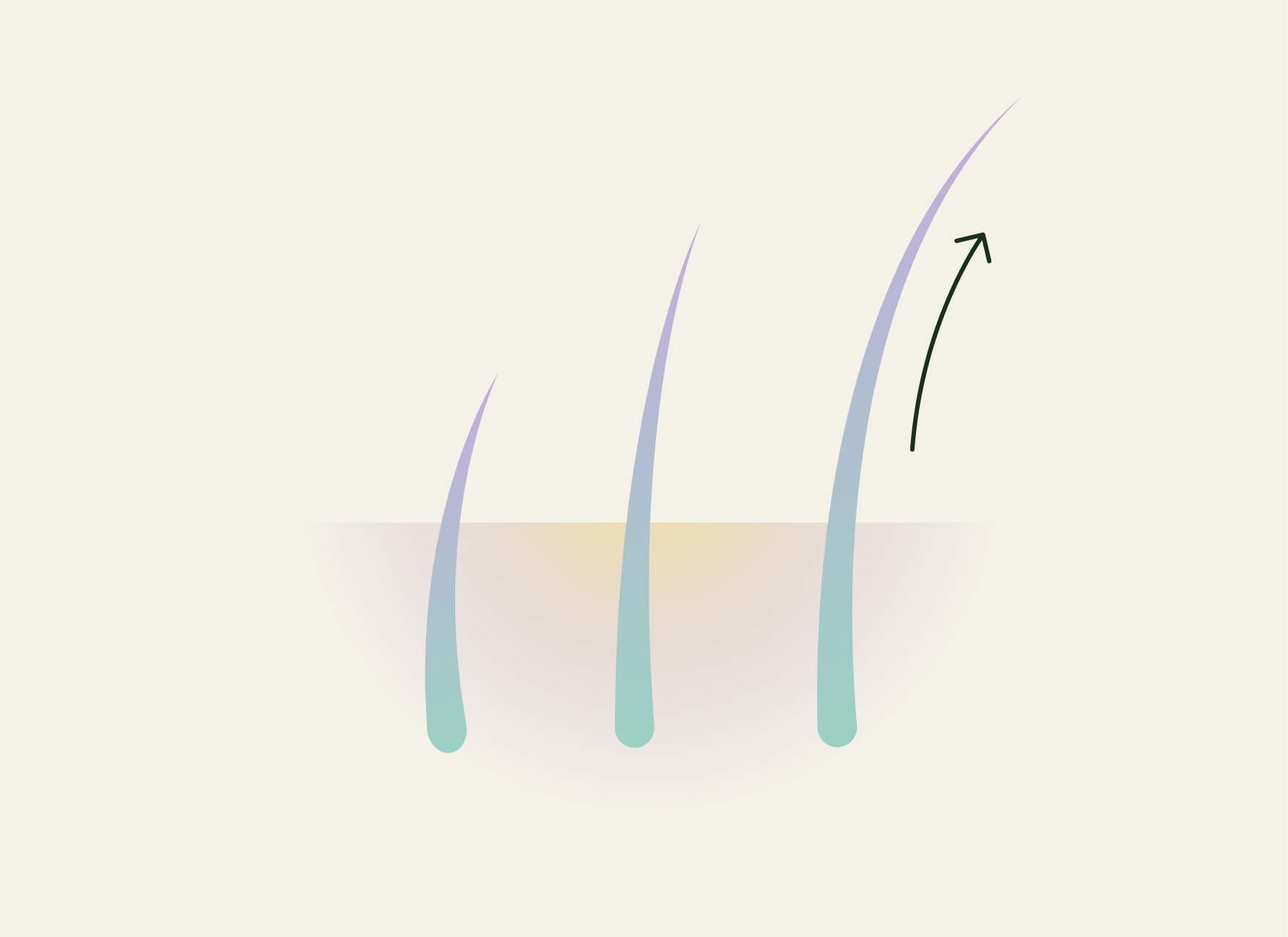
It works by blocking the enzyme 5-alpha reductase from converting testosterone into another hormone called DHT. Why does that matter for hair loss, you ask? Well, DHT acts on your hair follicles and causes them to shrink, until eventually, they close up and your hair stops growing altogether. FYI: this process is called miniaturisation.

By lowering your DHT, finasteride can prevent further losses. And in some cases, it can reverse the miniaturisation process, so your hair re-grows longer and thicker.

Ready to regain your confidence?
Take the hair quiz today and we’ll recommend a treatment plan designed to stop hair loss and power regrowth.

Where regrowth is most likely (and where it isn’t)

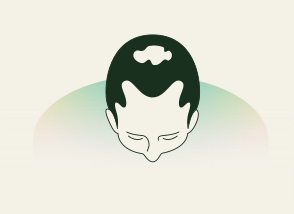
Good news: finasteride can increase hair growth in all areas affected by male pattern baldness, aka hereditary hair loss. Yet the best results in terms of regrowth are generally seen on the crown of your head.

This type of hair loss follows a specific pattern. First, your hairline thins and recedes. Then later on, you lose hair on your crown.

Here’s what the research says:

  • In two studies of men who were bald on the crown of their head (aka vertex baldness), taking finasteride drove a significant increase in hair count compared to placebo after 6 and 12 months. After a year, men on finasteride had 107 more hairs within a 1-inch diameter circle (5.1cm squared) on their scalp
  • Finasteride increased hair growth on the crown, mid, frontal (where your hairline is), and temporal (around your ears) regions of the scalp in men with vertex (crown) baldness after 24 months, per an analysis of multiple studies
  • Based on the findings of multiple phase III clinical trials, it’s estimated that men with vertex baldness have a 61% chance of visible, mild to moderate regrowth after two years

How long until finasteride regrows hair?

It usually takes around 6 months of daily use to notice changes on finasteride. Results tend to peak after around a year—see our full guide on how long finasteride takes to work for a detailed timeline

Discover hair loss treatments
Struggling with thinning hair or a receding hairline? Our exclusive, science-backed formulas are proven to slow down hair loss and help regrowth.
icon
Trusted by over 500,000 men
icon
Science-backed formulas you can’t get elsewhere
icon
Effective in 9 out of 10 men using our combined approach

Does finasteride regrow hair permanently?

Unfortunately, finasteride isn’t a “cure” for baldness. If you want to maintain your results, you’ll have to keep taking it. Your hair loss will progress as it would have naturally if you stop.

How to maximise results

So, how can you make sure you’re getting the most out of finasteride?

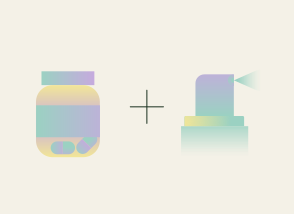
  • Use finasteride alongside minoxidil, another hair loss treatment. This combination is much more effective than using either medicine alone
  • Stay consistent. Finasteride is meant to be taken every day at around the same time. Follow your provider’s advice exactly
  • Try microneedling. This has been shown to boost follicle stimulation in men with hair loss. Make sure a qualified professional does the procedure: don’t try it at home.

When is it too late to start finasteride?

Finasteride is meant for men with mild to moderate hair loss. If you’re completely bald and your hair follicles have entirely closed up (at this point, they’re called dead hair follicles), it won’t work.

But there’s a caveat here. When hair stops growing, the follicles don’t always tap out right away. Sometimes, they can lie dormant for a while. If you use hair loss treatment at that point you might see an effect. A trained professional can tell you whether your follicles are dead or dormant.

Bottom line: the sooner you get started on hair-loss medicine, the better.

By the way, finasteride is only for male pattern baldness. Don’t use it if you have any other type of hair loss, such as shedding caused by stress, a medical condition, or a reaction to a medication.

Want to get started on hair loss medicine? We’ve got you. Take our quiz to find out which scientifically-proven treatment is right for you. Then, our clinicians will recommend a personalised plan to get your hair back.
FAQ

Does finasteride regrow hair? FAQ

DisclaimerAt MANUAL, we ensure that everything you read in the Health Centre is medically reviewed and approved. However, the information provided is not meant to replace professional medical advice, diagnosis, or treatment. It should not be relied upon for specific medical advice.
References
icon¹

Asfour, Leila, et al. “Male Androgenic Alopecia,” in Endotext, South Dartmouth (MA): MDText.com Inc.scribble-underline, 2023 https://www.ncbi.nlm.nih.gov/books/NBK278957/ Accessed 10 Nov. 2025.

icon²

Dhurat, Rachita, and Mathapati, Sukesh. “Response to Microneedling Treatment in Men with Androgenetic Alopecia who Failed to Respond to Conventional Therapy,” Indian Journal of Dermatologyscribble-underline, vol. 60, issue 3, 2015:260-263 https://pmc.ncbi.nlm.nih.gov/articles/PMC4458936/.

icon³

Electronic Medicines Compendium (EMC). Finasteride 1 mg Film-Coated Tablets: Patient Information Leaflet.scribble-underline Medicines.org.uk, https://www.medicines.org.uk/emc/files/pil.13542.pdf. Accessed 13 Nov. 2025.

icon⁴

“Finasteride,” British National Formulary,scribble-underline https://bnf.nice.org.uk/drugs/finasteride/. Accessed 10 Nov. 2025.

icon⁵

Gupta, Aditya, et al. “Relative Efficacy of Minoxidil and the 5-α Reductase Inhibitors in Androgenic Alopecia Treatment of Male Patients, A Network Meta-analysis,” JAMA Dermatologyscribble-underline, vol. 158, no. 3, 2022:266-274 https://pmc.ncbi.nlm.nih.gov/articles/PMC8811710/.

icon⁶

Hu, Ruiming, et al. “Combined Treatment with Oral Finasteride and Topical Minoxidil in Male Androgenetic Alopecia: A Randomized and Comparative Study in Chinese Patients,” Dermatologic Therapyscribble-underline, vol. 28, issue 5, 2015:303-308 https://onlinelibrary.wiley.com/doi/abs/10.1111/dth.12246.

icon⁷

Kaiser, Michael, et al. “Treatment of Androgenetic Alopecia: Current Guidance and Unmet Needs,” Clinical, Cosmetic and Investigations Dermatologyscribble-underline, vol. 16, 2023:1387-1406 https://pmc.ncbi.nlm.nih.gov/articles/PMC10239632/.

icon⁸

Mayo Clinic. “Finasteride (Oral Route),” Mayoclinic.orgscribble-underline, 2025 https://www.mayoclinic.org/drugs-supplements/finasteride-oral-route/description/drg-20063819. Accessed 10 Nov. 2025.

icon⁹

Olsen, Elise A., et al. “Global Photographic Assessment of Men Aged 18 to 60 Years With Male Pattern Hair Loss Receiving Finasteride 1mg or Placebo,” Journal of the American Academy of Dermatologyscribble-underline, vol. 67, issue 3, 2012:379-386 https://www.jaad.org/article/S0190-9622(11)01184-4/abstract.

icon¹⁰

“Propecia (finasteride): Tablets 1mg,” Food and Drug Administratioscribble-underlinen,scribble-underline 2010 https://www.accessdata.fda.gov/drugsatfda_docs/label/2011/020788s018lbl.pdf Accessed 10 Nov. 2025.

icon¹¹

Piraccini, B M., et al. “Efficacy and Safety of Topical Finasteride Spray Solution for Male Androgenetic Alopecia: A Phase III, Randomized, Controlled Clinical Trial,” Journal of the European Academy of Dermatology and Venereologyscribble-underline, vol. 36, issue 2, 2021:286-294 https://onlinelibrary.wiley.com/doi/10.1111/jdv.17738.

icon¹²

Shapiro, Jerry, and Kaufman, Keith D., “Use of Finasteride in the Treatment of Men with Androgenetic Alopecia (Male Pattern Hair Loss),” Journal of Investigative Dermatology Symposium Proceedingsscribble-underline, vol. 8, issue 1, 2003:20-23 https://www.sciencedirect.com/science/article/pii/S0022202X15529357.

card-image
Hair loss
Finasteride and minoxidil
Here’s what to know about using both hair loss medicines at once.
card-image
Hair loss
What helps hair growth in men?
Here’s what research shows actually boosts hair growth in men.
card-image
Hair loss
How to use topical minoxidil
It’s easy to get started with minoxidil. Here’s how.
Have a question?
phone icon
020 3912 9885Monday - Friday 9am - 5pm
support icon
help@joinvoy.comWe aim to reply in 24hrs
email icon
press@joinvoy.comPress & media inquiries
Our services are not intended for use in a medical emergency. If you need urgent medical attention, please call 111 or 999.

Women

  • Weight Loss
  • Menopause

Men

  • Weight Loss
  • Testosterone

Prevention

  • Do Health

Legal

  • Privacy policy
  • Terms & Conditions
  • Terms of Sale
  • Complaints

Get help

  • Help Centre (FAQ)
facebooktwitterinstagram
Copyright 2025 Voy. All rights reserved.
Pharmacies: Manual PharmacySuperintendent Pharmacist: Dawn NeilGPhC Registration: 2063362
registered pharmacycqc ratingcpd member