

















Association of Breast Surgery. “Investigation and Management of Gynaecomastia in Primary and Secondary Care,” Associationofbreastsurgery.org.uk, https://associationofbreastsurgery.org.uk/media/b2ljdqhr/abs-summary-statement-gynaecomastia-v3.pdf. Accessed 19 Dec. 2025.
You might know Clomid as a fertility treatment for women. But sometimes, it’s used off-label to treat low T.
So, what does Clomid do for men? Read on to find out.
Key Takeaways
- What it is: Selective oestrogen receptor modulator (SERM)
- How it’s used: Taken as a pill
- Who it’s for: Men with confirmed low T
- Pros: Can boost T while preserving fertility
- Cons: Possible side effects
- Availability: Private prescription
What is Clomid (clomifene citrate)?
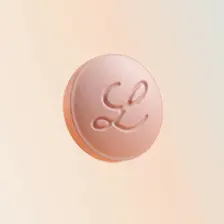
It’s a type of medicine called a selective oestrogen receptor modulator (SERM). That means it works by blocking certain oestrogen receptors in the brain.
Clomid is licensed as a fertility treatment that induces ovulation in women. But because there’s evidence showing that it can also help boost T in men, doctors may sometimes prescribe it off-label for testosterone deficiency.
Good to know: off-label prescribing is a common and accepted practice in some areas of medicine, if there’s good evidence behind a particular treatment.
How does Clomid work?
So, what does Clomid do? It amplifies the natural brain signals that tell the testicles to make testosterone and sperm. Blocking the brain’s oestrogen receptors increases levels of the hormones FSH and LH—which stimulate the testes to produce sperm and T.
Here’s how Clomid compares to other low T treatments:
- Testosterone replacement therapy (TRT) replaces T your body isn’t producing.
- hCG works directly on the testicles to stimulate T production.
- Clomid works on the brain to increase hormones that stimulate T production.
Clomid for men: what does it do?
There are three main ways Clomid is used for men.
Low T treatment for men not using TRT
Clomid can boost T while improving fertility. Here, it can be used instead of TRT if your low T isn’t due to any issues with your pituitary gland.
A stronger, sharper you
Get your energy, drive and strength back, with a tailored testosterone service plan built by leading TRT doctors.
Effective personalised medication
Access to expert clinical team
Regular health monitoring
All-inclusive subscription - no extra costs
For male infertility with no specific cause
In addition to increasing testosterone, Clomid may improve sperm production and quality. Though results can be inconsistent.
Clomid for fertility
Since it stimulates T and sperm production, Clomid can boost male fertility.
Testosterone starts to rise after about 4-6 weeks on Clomid, but it takes longer to kickstart sperm production.
Sperm takes about 90 days to fully mature. So, we’d expect to see changes to your fertility after 8-12 weeks (at the earliest). Effects generally peak after 4-6 months.
Clomid dosage for men
Because it isn’t licensed for men, there’s no official Clomid dosage for low T.
Your provider will advise on what’s best. But to give you an idea: some people start on a dose of 25mg every other day.
What’s the best time to take Clomid for men?
There isn’t one: there’s no strong evidence showing that it matters what time of day you take Clomid tablets.
But it’s best to take it at the same time every day.
Signs Clomid is working (and how long it can take)
We mentioned earlier that your testosterone could start to rise after 4-6 weeks on Clomid. Though it may take a few months for your low T symptoms to ease.
- Testosterone will continue to improve over 3-6 months, reaching a steady state at the 9-12 month mark
- Some people notice reduction in low T symptoms after 3 months
- We would expect to see improvements to your fertility after around 3 months
By the way: Clomid is most effective in younger men, but it will still work as you get older.
Feeling drained and unfocused?
It might be low testosterone. Get answers fast with an at-home blood test.
Clomid side effects in men
In scientific research, less than 10% of men reported Clomid side effects. And these were mild or moderate.
Symptoms may include:
- Mood changes
- Breast/nipple tenderness
- Fatigue
- Headaches
- Hot flushes
There are some reports of changes to vision when on Clomid, but it’s extremely rare in men. For example, in one study involving over 12,000 men, Clomid didn’t cause any significant changes to vision.
See a doctor right away if you notice any issues with your vision.
Things to do or avoid while taking Clomid
You can support your T levels while taking Clomid by:
- Lifting heavy weights. Heavy compound lifting, like squats and deadlifts, can naturally boost T.
- Maintaining a healthy lifestyle. That includes taking care of your mental health, avoiding smoking and drinking, eating well, exercising regularly, prioritising sleep, and maintaining healthy relationships.
We recommend avoiding alcohol. Clomid is metabolised by the liver and heavy drinking can create additional stress, which may potentially lead to liver issues. Plus, alcohol lowers T and impairs sperm quality, so it’s working against the medicine.
Clomid vs other treatments
So, how do Clomid tablets stack up against other treatments?
Clomid vs enclomiphene
Clomiphene is a mixture of two compounds - zuclomiphene and enclomiphene. In terms of chemical structure, these zuclomiphene and enclomiphene are mirror images of each other: just like your left and right hands.
But Clomid is a licensed and approved medication, while enclomiphene is not. That means that only Clomid is available right now.
Clomid vs Nolvadex (tamoxifen)
These are both SERMs and are used off-label for low T. However, there’s more evidence behind Clomid as a treatment for low T and male infertility.
Nolvadex is more commonly used off-label to treat breast tissue growth.
Clomid UK: Access, prescriptions, and cost
You can get Clomid via private prescription. Be sure to work with a specialist clinician who has experience prescribing it to men for low T.
Watch out: you should only buy Clomid from registered clinics and pharmacies. Otherwise, there’s no guarantee the product is genuine or safe to take.
Curious about your low T treatment options? Let us help. At Voy, we’ll create a personalised plan to get your T back within a healthy range.
Take our quiz or order a testosterone blood test to get started.