











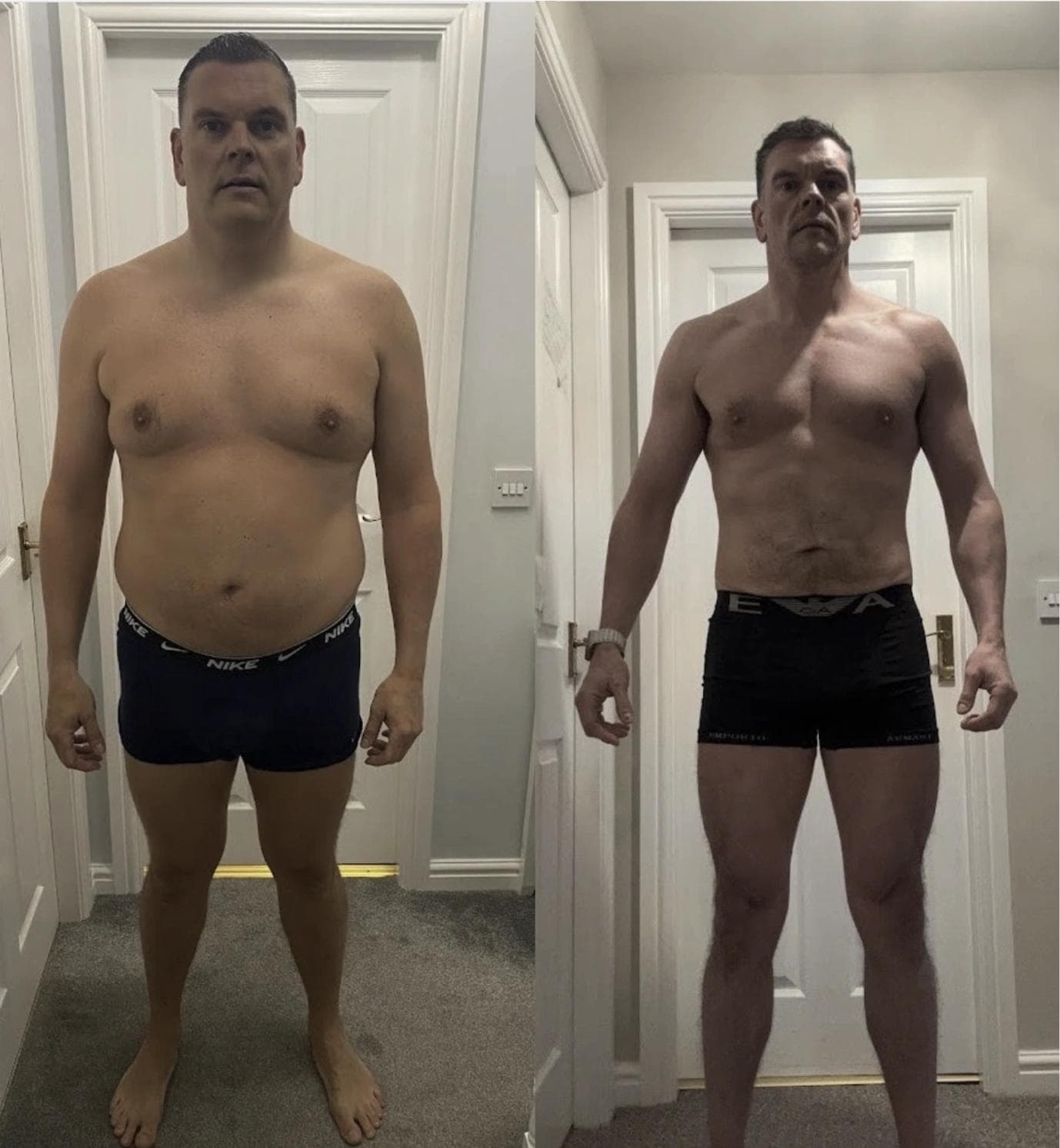
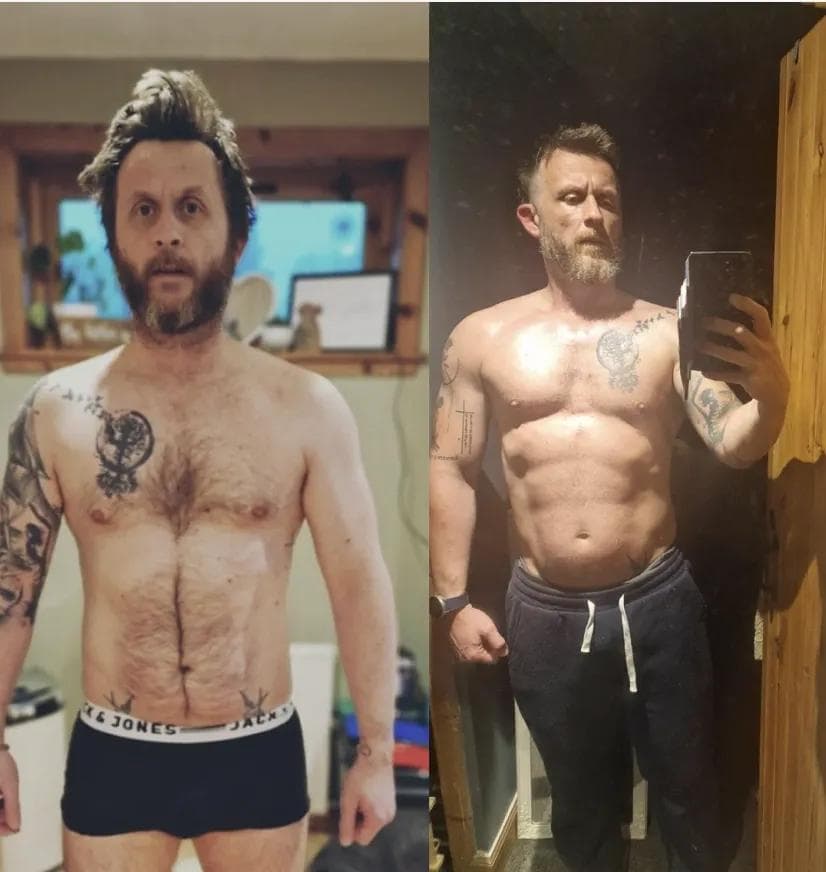


Bassil, Nazem, et al. "The Benefits and Risks of Testosterone Replacement Therapy: A Review." Therapeutics and Clinical Risk Management, vol. 5, no. 3, 2009, pp. 427–448. https://pmc.ncbi.nlm.nih.gov/articles/PMC2701485/
Testosterone is the hormone behind muscle mass, strength and physical performance in men. It also supports energy, sex drive and bone density. Here's what the research actually shows about testosterone, muscle and strength, and what TRT can do if your levels are clinically low.
Key Takeaways
- Testosterone supports muscle mass and strength, but is only indicated for medical purposes in confirmed testosterone deficiency. It should not be used for performance enhancement.
- Low testosterone makes it harder to build muscle and recover from training
- TRT can improve muscle mass and reduce fat in men with confirmed testosterone deficiency
- Regular strength training alongside TRT produces the best results
- TRT is not the same as anabolic steroids. The doses are very different and so are the risks
- Struggling to build muscle despite a healthy lifestyle? Low testosterone may be worth testing for.
How does testosterone build muscle?
TRT is prescribed to treat confirmed testosterone deficiency and is not licensed for muscle building. But if your levels are clinically low, restoring them can support muscle growth due to testosterone's role in the body.
Testosterone stimulates protein synthesis, the process by which your body builds and repairs muscle tissue, and it inhibits protein breakdown. These combined effects cause muscles to grow bigger over time. Testosterone also encourages stem cells to become muscle rather than fat cells.
That said, testosterone is not the only factor. Not training enough, poor nutrition, lack of sleep, alcohol and stress all work against muscle growth. Testosterone is essential for muscle building, but at healthy levels it will not drive results on its own.
Eating enough protein is critical. Aim for at least 1.6g per kg of body weight per day. Regular strength training, good sleep, managed stress and less alcohol all help too.
Feeling drained and unfocused?
It might be low testosterone. Get answers fast with an at-home blood test.
Does testosterone build strength as well as muscle?
Testosterone's clearest effect is on muscle mass, the actual size and volume of your muscle tissue. Its relationship with strength is more nuanced, but that does not mean TRT will not make you stronger.
Research in men aged 20 to 59 found testosterone levels were positively associated with muscle mass but showed no significant link with grip strength in healthy men. However, in men with confirmed testosterone deficiency, restoring levels through TRT has been shown to improve both muscle mass and strength. Think of testosterone as the foundation. Strength gains still depend on how you train, sleep and eat, but without adequate testosterone those efforts are working against the tide.
Free testosterone vs total testosterone: which matters for muscle?
When you get your testosterone measured, the result you usually see is your total testosterone. But that number alone does not tell the full story.
Testosterone circulates in the blood in three forms: free, albumin-bound and SHBG-bound (SHBG stands for sex hormone-binding globulin). Only free testosterone is biologically active and available for your muscles to use. The rest is carried by proteins in the blood.
Some men have total testosterone within the normal range but relatively low free testosterone, which can explain why symptoms like poor muscle recovery, low energy and reduced strength persist despite apparently normal results. A blood test that checks both gives a clearer picture of what is available to your muscles. Your Voy specialist will look at both when reviewing your results.
What about bone strength?
Muscle is not the only part of your body that depends on healthy testosterone levels. Your bones do too.
Testosterone plays a direct role in maintaining bone mineral density. In men with low testosterone, bone density tends to decline over time, raising the risk of fractures and quietly undermining physical performance even when muscle mass looks reasonable on paper. For men focused on strength training, this matters. TRT has been shown to help maintain bone density in men with confirmed testosterone deficiency, supporting the full physical picture, not just what you see in the mirror.
Does testosterone naturally decline with age?
Yes. After around age 30, testosterone levels decline gradually by roughly 1 to 2% each year. Over a decade that adds up significantly. A man in his late 40s may have testosterone levels meaningfully lower than he did in his early 30s, even if he has always trained consistently.
This is part of why muscle building becomes harder with age and why recovery takes longer. It does not mean you are destined to lose the gains you have built, but it does explain why some men find their training stops delivering the same results it once did. If that sounds familiar, checking your testosterone levels is a straightforward first step.
Can you build muscle with low testosterone?
It's harder to build muscle with low T. Testosterone deficiency is associated with muscle loss and frailty in older men.
Though with the right habits in place, a good diet and hitting the gym regularly, it's possible. However, you would have better results if your T was within the normal range.
If you're struggling to build muscle despite a healthy lifestyle and have other symptoms of low testosterone like decreased energy and libido, low T could be worth testing for.
Is TRT the same as anabolic steroids?
No. While both involve testosterone, the doses are very different. It's true that the higher your T, the more muscle gains you're likely to make, but taking very high doses comes with serious risks like dependence and heart problems. With anabolic steroids, the dose of T is up to 4 to 5 times higher than what your body naturally makes. The risks outweigh the benefits.
TRT, by contrast, restores testosterone to a healthy physiological range. It is a prescription-only treatment, overseen by a clinician and monitored with regular blood tests, designed to address deficiency rather than enhance performance beyond natural limits.
What muscle gains can you expect from TRT?
TRT is a prescription-only treatment for confirmed testosterone deficiency and is not prescribed for muscle building alone. For men with low testosterone, though, there is good evidence that restoring T levels helps build muscle and lower fat mass. Both younger and older men are just as responsive to TRT's effects on muscle growth.
The lower your testosterone is before starting TRT, the more likely you are to experience significant muscle gains, because restoring levels from a lower baseline tends to produce more noticeable improvements.
For best results, do regular strength training while on TRT. You should notice changes within a few months. Having a healthy lifestyle will also enhance your results on TRT.
A stronger, sharper you
Get your energy, drive and strength back, with a tailored testosterone service plan built by leading TRT doctors.
Effective personalised medication
Access to expert clinical team
Regular health monitoring
All-inclusive subscription - no extra costs
What are the risks of taking testosterone without medical supervision?
Using testosterone without a prescription carries serious risks. Without proper blood testing and monitoring, there is no way to know whether your testosterone is actually low, what dose is appropriate, or whether key health markers are moving into dangerous ranges.
Unsupervised use has been linked to cardiovascular problems, liver strain, testicular atrophy and permanent suppression of the body's own testosterone production.
If you want to optimise your strength and muscle, the right starting point is a blood test. If your testosterone is confirmed low, a clinician can work with you on a safe, monitored treatment plan.
Could low testosterone be holding back your gains?
For men with confirmed low testosterone, TRT can get your T back within the normal range, easing symptoms like low energy and libido, and helping you get back on track in the gym. Get started by taking our quiz.