








Weight Loss
Menopause
menu-close
WHAT WE TREAT
Weight loss
icon
Menopause
icon
ACCOUNT
Log in
icon
OVERVIEW
Weight loss overview
icon
TREATMENTS
Explore all options
Explore all options
icon
Mounjaro
Mounjaro
Lose up to 23% body weight
icon
Wegovy
Wegovy
Lose up to 21% body weight
icon
Saxenda
Saxenda
Lose up to 10% body weight
icon
Orlos
Orlos
Lose up to 8% body weight
icon
PROGRAMME
How it works
How it works
icon
App
App
icon
ABOUT
Results
icon
Experts
icon
RESOURCES
Guides & tips
icon
ACCOUNT
Log in
icon
GET IN TOUCH
020 3912 9885
Mon-Fri 9:00-17:30
icon
OUR CLINIC
Menopause overview
icon
Pricing
icon
Specialists
icon
TREATMENT PLANS
Hormone replacement therapy
icon
Testosterone treatment
icon
Cognitive behavioural therapy
icon
Vaginal treatments
icon
BLOOD TESTS
Women's midlife (MOT) blood test
icon
Check your HRT and testosterone test
icon
Start testosterone blood test
icon
WHAT WE TREAT
Skincare
New
icon
Perimenopause
icon
Menopause
icon
ADHD and menopause
icon
Premenstrual Dysphoric Disorder (PMDD)
icon
LEARN
Guides
icon
Treatments
icon
ACCOUNT
Log in
icon
SUPPORT
FAQ
icon
Home/Guides & Tips/Testosterone/

Is testosterone a steroid?

TRT

Is testosterone a steroid?

Testosterone is a steroid. But that doesn’t mean testosterone replacement therapy is the same as taking “steroids.” Here we break down the differences.

clinician image

Medically reviewed by Medical Director

Dr. Jeff Foster - Men’s Health & TRT Specialist

iconUpdated 23rd December 2025

Testosterone is the main male sex hormone. But did you know that it’s also a steroid? In fact, “steroid” is just the name for hormones that are made from cholesterol.

So, does that mean you’re “taking steroids” if you’re using testosterone replacement therapy (TRT), which is a synthetic version of T? In a word: no. Here’s the lowdown on testosterone and steroids.

Medical testosterone treatment compared with anabolic steroid misuse.

Anabolic steroids vs TRT

Anabolic steroids are one type of steroid hormone. They’re involved in metabolic processes concerned with building: for example, building muscle. Testosterone is an anabolic steroid.

Here’s where it gets confusing. The term “anabolic steroid” commonly refers to a class of performance-enhancing drugs (that are widely abused in sport). These are also synthetic versions of testosterone—but they aren’t the same as TRT.

Plus, some medicines are also classed as steroids. They’re used to treat a range of illnesses, from skin disease to asthma.

Let’s take a closer look at the differences between testosterone replacement therapy and anabolic steroids.

Features
Purpose
Dose
Potency
Risks
Outcomes
Is it legal?
TRT
Treat low T
Doses of T within the normal ranges produced by the body
Lower
Generally well-tolerated
Bring T within normal levels, correct symptoms of low T
Yes, with a prescription
Anabolic steroids
Enhance sports performance
Up to 4 to 5 x higher than TRT
Higher
Dependence, risks to fertility, heart and liver health
Rapid muscle gain, enhancing performance
Legal for personal use, illegal to supply or sell

Men can be reluctant to start TRT—or even to seek help for their symptoms—because of the confusion between TRT and anabolic steroids. The latter are associated with abuse and doping scandals, and come with serious risks to your health.

But TRT is a medical treatment: it’s not “doing steroids”. It’s given in much safer doses and while you’re taking it, you’ll have regular blood tests to make sure your T stays within a natural range.

Feeling drained and unfocused?
It might be low testosterone. Get answers fast with an at-home blood test.

TRT for bodybuilding

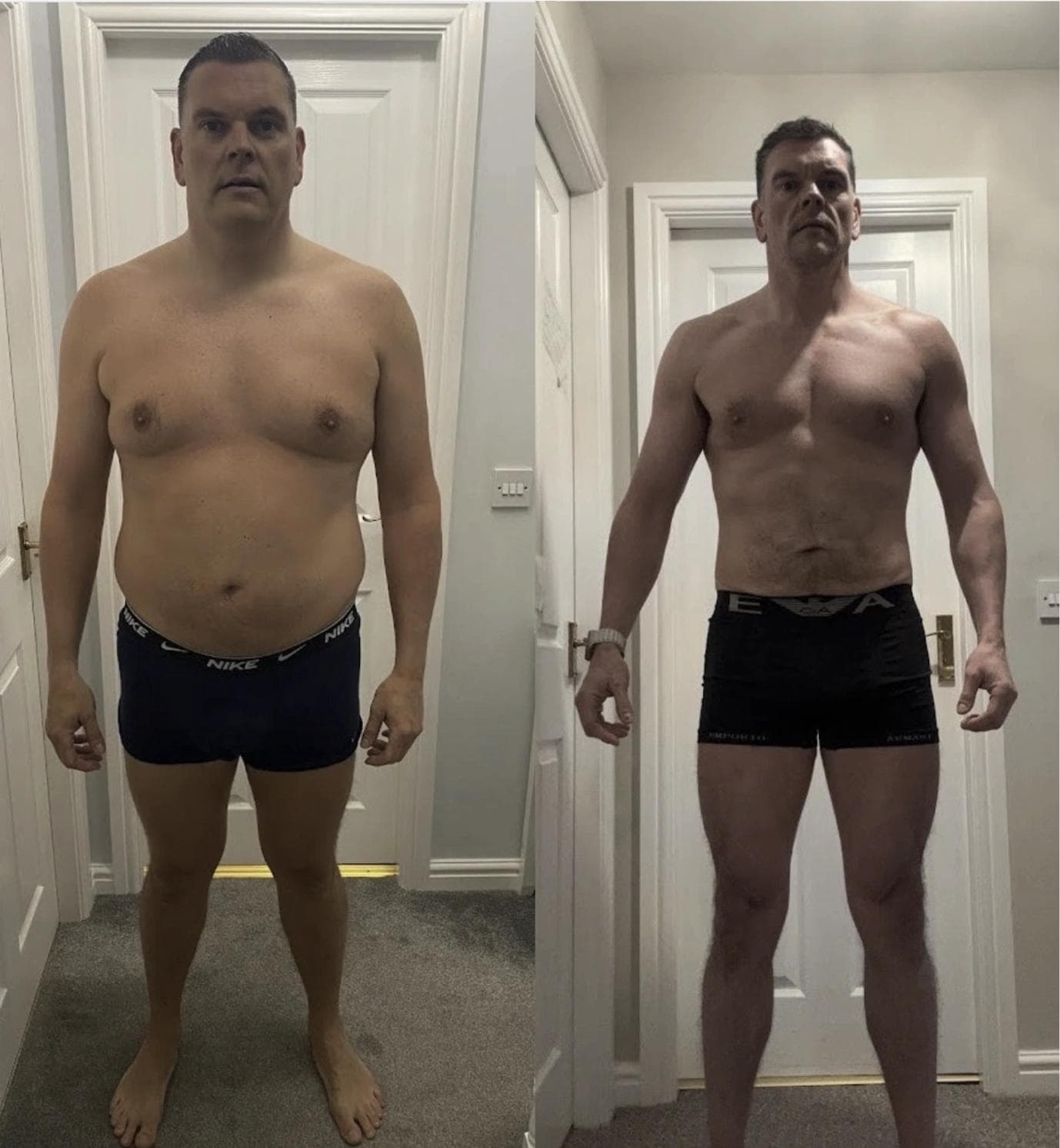
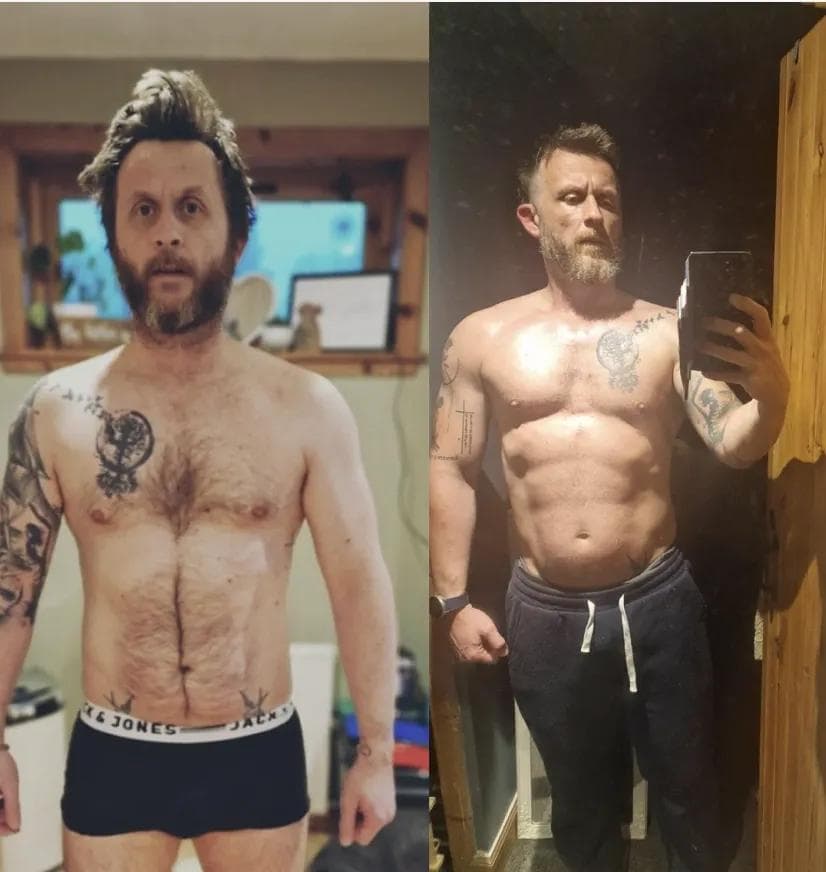
If you’re exercising regularly, it’s true that taking testosterone will help to build muscle. But TRT will not give you a bodybuilder’s physique.

It’s designed to bring your T levels back within the healthy range, to combat low T symptoms like reduced strength. The aim here is to restore your health and quality of life. For example, TRT can help men who were previously too tired to exercise get back into it. And for those who are strength training, TRT can help improve lean body mass.

What about if you have normal T levels and you want to build muscle? Studies show that you need to take very high doses of testosterone to make significant gains, compared to the results you might see from just exercising. But this comes with risks to your heart and liver health—and your body might permanently stop producing its own testosterone.

That’s why we don’t advise anyone to take TRT for bodybuilding or sports performance. Speak with your provider if you’re worried about your T levels.

Risks, safety and side effects of testosterone

Taking TRT can come with side effects, though it’s generally safe and well-tolerated. Symptoms might include:

  • Acne
  • Breast tissue growth
  • Tiredness
  • Fluid retention
  • Reduced fertility (to maintain fertility while on TRT, doctors may recommend using medications like human chorionic gonadotropin)

When used for sports performance, anabolic steroids are usually taken at high doses. And the side effects can be serious:

  • Dependence
  • Infertility
  • Shrunken testicles, erectile dysfunction
  • Increased risk of prostate cancer
  • Heart attack or stroke
  • Liver or kidney problems
  • High blood pressure
  • Blood clots
  • Aggressive behaviour

Think you have low T? You should only take TRT if a qualified medical professional prescribes it to you. But first, you need to confirm whether you’re dealing with low T or something else.

We can help with that. Take our quiz and check your T levels with our quick, at-home testosterone blood test. Our clinicians will assess your results and recommend which treatment is best.

A stronger, sharper you
Get your energy, drive and strength back, with a tailored testosterone service plan built by leading TRT doctors.
icon
Effective personalised medication
icon
Access to expert clinical team
icon
Regular health monitoring
icon
All-inclusive subscription - no extra costs
FAQ

Is testosterone a steroid? | FAQ

Continue reading

  • Male menopause (andropause)
  • Benefits of testosterone replacement therapy
  • Testosterone gel for men
  • Nebido injection
  • Enclomiphene citrate
  • How and where to inject testosterone
  • Subcutaneous testosterone injections
  • Once you start testosterone therapy, can you stop?
  • High testosterone in men
  • Oestradiol levels in men
  • Foods that increase testosterone
  • How to increase testosterone
  • Does testosterone make you lose weight?
  • Does masturbation decrease testosterone?
  • Does ashwagandha increase testosterone?
  • Does nicotine increase testosterone?
  • TRT cost in the UK
  • Men’s health stigma around low testosterone
DisclaimerAt Voy, we ensure that everything you read in our blog is medically reviewed and approved. However, the information provided is not meant to replace professional medical advice, diagnosis, or treatment. It should not be relied upon for specific medical advice.
References
icon¹

Abouelmagd, Alaa Abdrabou, et al. “Efficacy and Safety of Retatrutide, a Novel GLP-1, GIP, and Glucagon Receptor Agonist for Obesity Treatment: A Systematic Review and Meta-Analysis of Randomized Controlled Trials.” Proceedings (Baylor University. Medical Center)scribble-underline, vol. 38, no. 3, 2025, pp. 291–303. https://pmc.ncbi.nlm.nih.gov/articles/PMC12026077/

icon²

Jastreboff, Ania M., et al. “Body Composition Changes with Retatrutide in Adults with Type 2 Diabetes: A Randomized, Double-Blind, Placebo-Controlled, Phase 2 Trial.” The Lancet Diabetes & Endocrinologyscribble-underline, vol. 15, 2025, pp. 112–123. https://www.sciencedirect.com/science/article/abs/pii/S2213858725000920.

icon³

Jastreboff, Ania M., et al. “Triple–Hormone-Receptor Agonist Retatrutide for Obesity.” The New England Journal of Medicinescribble-underline, vol. 389, no. 6, 2023, pp. 514–526. https://pubmed.ncbi.nlm.nih.gov/37366315/

icon⁴

Rosenstock, Julio, et al. “Retatrutide, a GIP, GLP-1 and Glucagon Receptor Agonist, for People with Type 2 Diabetes: A Randomised, Double-Blind, Placebo and Active-Controlled, Parallel-Group, Phase 2 Trial Conducted in the USA.” The Lancetscribble-underline, vol. 402, no. 10401, 2023, pp. 529–544. https://pubmed.ncbi.nlm.nih.gov/37385280/

icon⁵

U.S. National Library of Medicine. “A Study of Retatrutide (LY3437943) in Participants with Obesity or Overweight (TRIUMPH-1) (NCT05929066).” ClinicalTrials.govscribble-underline. https://clinicaltrials.gov/study/NCT05929066. Accessed 3 Nov. 2025.

icon⁶

U.S. National Library of Medicine. “A Study of Retatrutide (LY3437943) in Participants with Obesity (Maintenance of Weight Loss) (NCT06859268).” ClinicalTrials.govscribble-underline. https://clinicaltrials.gov/study/NCT06859268. Accessed 3 Nov. 2025.

icon⁷

Zheng, Z., et al. “Glucagon-Like Peptide-1 Receptor: Mechanisms and Advances in Therapy.” Signal Transduction and Targeted Therapyscribble-underline, 2024. https://www.nature.com/articles/s41392-024-01931-z

card-image
Testosterone
Is TRT safe?
TRT is generally safe for most men, but there are a few key points to consider before starting.
card-image
Testosterone
How to get TRT in the UK
TRT could help with symptoms like low sex drive or decreased strength. Here’s how to get it in the UK.
card-image
Testosterone
Why so many men wait years to get help for low T
Low T is underdiagnosed and undertreated. And there are several reasons why.
Have a question?
phone icon
020 3912 9885Monday - Friday 9am - 5pm
support icon
help@joinvoy.comWe aim to reply in 24hrs
email icon
press@joinvoy.comPress & media inquiries
Our services are not intended for use in a medical emergency. If you need urgent medical attention, please call 111 or 999.

Programme

  • How it works
  • Treatments
  • Coaching
  • The Voy App

Voy

  • Experts
  • Results

Legal

  • Privacy policy
  • Terms & Conditions
  • Terms of Sale
  • Complaints

Get help

  • Help Centre (FAQ)
facebooktwitterinstagram
Copyright 2025 Voy. All rights reserved.
Pharmacies: Manual PharmacySuperintendent Pharmacist: Dawn NeilGPhC Registration: 2063362
registered pharmacycqc ratingcpd member