More from Morelife

Lifestyle-related disease is one of the biggest preventable burdens on the NHS — 40% of UK ill health is linked to modifiable risk factors, and obesity alone costs UK society an estimated £126 billion a year. These conditions are becoming more common, not less — and it's often the people most affected who standard services struggle to reach.

Our approach combines deep community engagement with digital enablement at scale, because closing the inequality gap requires both: trust and reach rooted in community, and delivery at a scale that matches the size of the problem.

Our approach starts by understanding how your system works: the formal structures, the informal networks, and the local assets already doing good work but under-resourced to do more. We then activate the right partners to deliver, and we build the underlying infrastructure that makes prevention genuinely community-owned rather than delivered at arm's length.

We provide the training and support local partners need to drive consistent, credible prevention services — including peer champions with lived experience delivering alongside professional staff.

We pay local partners properly for the real value they provide in prevention, so good community organisations can play a fuller role.

We're there to actively support partners to drive the best outcomes — co-producing delivery with those closest to the community, and adapting as we learn what works.

We provide the systems to manage the patient and intervention, and support delivery with data reporting.

Delivery that's genuinely embedded in the community, building capacity within existing assets and using trusted relationships to reach people. In Greater Manchester, this approach achieved 59% of service users from non-white and the two most deprived decile populations. Through the Local Activator model, delivering via six trusted local partner organisations, 76% of participants completed and 74% achieved weight loss, in a cohort where more than half were from the most deprived areas.

Our programmes are designed and overseen by HCPC-registered psychologists, using structured assessment to spot what's really affecting engagement — low mood, anxiety, emotional eating, isolation — from the outset, and motivational interviewing throughout to support compassionate, autonomy-led change.

We run a dedicated wraparound pathway for patients with disordered or emotional eating, using CBT and ACT-informed techniques to reframe unhelpful thinking and manage triggers during high-risk moments.

Where complex needs or challenging social circumstances affect engagement, we stabilise routines and confidence first before setting more demanding goals — every technique is mapped to a clear mechanism of action, creating an auditable link between what we do and why it works.

Monthly clinical supervision from a psychologist and dietitian ensures consistent application of behavioural change techniques across all staff, so quality doesn't drift as programmes scale.

We provide the systems to manage the patient and intervention, and support delivery with data reporting.

Addressing the psychological root cause, not just the behaviour, delivers outcomes standard weight management can't reach. Our wraparound disordered eating pathway achieved a mean weight loss of 15.06kg at 16 weeks, alongside significant reductions in depression and anxiety. Across our wider service, 68% of participants reported confidence to maintain weight loss and 66% improved mental wellbeing.

Dietitians, psychologists, physical activity specialists, endocrinologists and physicians — a full multidisciplinary team, delivering where people actually live.

We assess need, barriers and preferences upfront, matching people to the right intensity, mode and specialist input from the outset — rather than the traditional model of escalating support only after someone has failed at a lower-intensity intervention. This avoids delay and disengagement, and makes better use of public funds by directing intensive resources to those most at risk of health inequalities.

We co-design adapted pathways for specific needs — including a learning disability pathway built with carers, LD nurses and people with lived experience, using Easy Read materials and peer champions to support understanding.

Where needs sit outside programme scope — safeguarding, mental health, clinical risk — we escalate through clear routes to GPs, referrers or urgent care, so complexity is managed, not turned away.

Under specialist wraparound care, patients with genuine complexity achieve outcomes standard programmes don't reach. One patient with diverticular disease, hypertension and arthritis lost 49% of her body weight on a tailored medicated pathway; another, with ADHD, bipolar disorder and agoraphobia, lost 12.6% while largely housebound. In Suffolk, our adapted learning disability pathway achieved 75% retention and 80% strong recommendations from participants.

Delivery that's genuinely embedded in the community, building capacity within existing assets and using trusted relationships to reach people. In Greater Manchester, this approach achieved 59% of service users from non-white and the two most deprived decile populations. Through the Local Activator model, delivering via six trusted local partner organisations, 76% of participants completed and 74% achieved weight loss, in a cohort where more than half were from the most deprived areas.

Named health coaches provide structured messaging and support between sessions — or deliver a full standalone digital pathway — so support is there whenever it's needed.

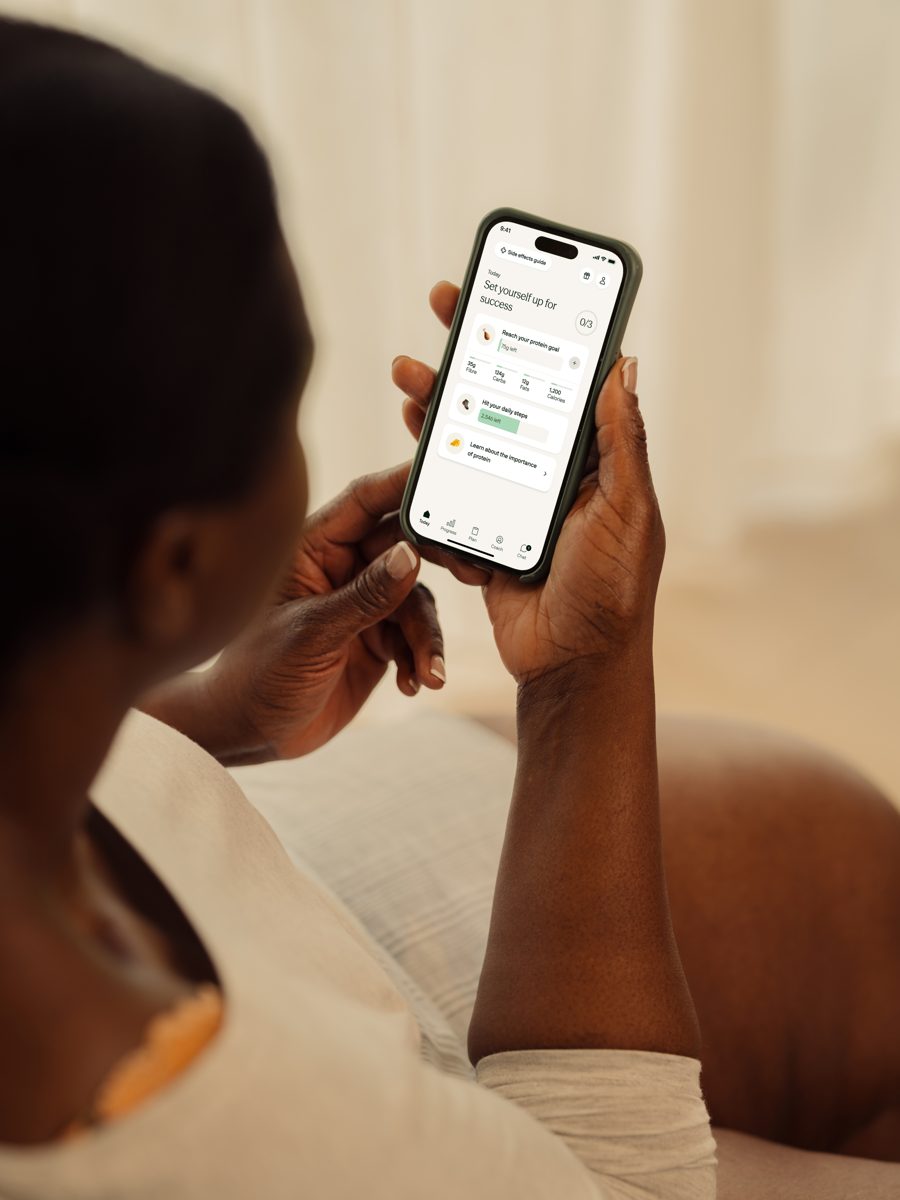
Multilingual app capabilities, culturally tailored content and WCAG-compliant accessibility mean digital support reaches people from all backgrounds.

Every feature is built around evidence-based behaviour change techniques — goal setting, self-monitoring, feedback — not generic health-tracking.

Our AI assistant, Joy, means patients never wait for an answer — handling routine clinical and lifestyle questions instantly and at a scale, while knowing exactly when to bring in a real clinician.

Under specialist wraparound care, patients with genuine complexity achieve outcomes standard programmes don't reach. One patient with diverticular disease, hypertension and arthritis lost 49% of her body weight on a tailored medicated pathway; another, with ADHD, bipolar disorder and agoraphobia, lost 12.6% while largely housebound. In Suffolk, our adapted learning disability pathway achieved 75% retention and 80% strong recommendations from participants.

In a retrospective study of 124,043 users engaging with GLP-1 and wraparound support, participants from the most deprived quintile lost 22.7% of body weight at 12 months, nearly identical to the 22.6% seen in the least deprived. Done well, digital doesn't just reach more people — it delivers the same quality of outcome to all of them.

A single CRM captures every referral, assessment, engagement and outcome across the entire pathway, creating one auditable source of truth.

Dashboards disaggregated by deprivation, ethnicity, age and disability provide live visibility of performance and inequalities — not just what happened last quarter.

We co-design adapted pathways for specific needs — including a learning disability pathway built with carers, LD nurses and people with lived experience, using Easy Read materials and peer champions to support understanding.

Using data to inform decisions is part of our culture - we review referral and engagement data at least weekly to spot where we need to adjust the pathway.

Under specialist wraparound care, patients with genuine complexity achieve outcomes standard programmes don't reach. One patient with diverticular disease, hypertension and arthritis lost 49% of her body weight on a tailored medicated pathway; another, with ADHD, bipolar disorder and agoraphobia, lost 12.6% while largely housebound. In Suffolk, our adapted learning disability pathway achieved 75% retention and 80% strong recommendations from participants.

Real-time, disaggregated data means we’re able to address problems whilst they're still small. In Hounslow, identifying low uptake in the most deprived postcodes led to a foodbank partnership that lifted referrals by 20% — evidence of activity, and of outcomes for the populations that matter most.