

















Aleissa, Majed. "The Efficacy and Safety of Oral Spironolactone in the Treatment of Female Pattern Hair Loss: A Systematic Review and Meta-Analysis." Cureus, vol. 15, no. 8, 2023, p. e43559, https://doi.org/10.7759/cureus.43559.
If you've noticed more hair on your pillow or around the shower drain, and you have polycystic ovary syndrome (PCOS), you're not alone, and we know how upsetting it can feel.
The good news is there’s real help available for female hair loss.
Key Takeaways
- PCOS can trigger hair thinning and loss due to elevated androgens that shrink hair follicles over time.
- PCOS hair loss typically looks like thinning along the parting and crown rather than complete baldness or a receding hairline.
- Several effective treatments exist, such as minoxidil.
- With the right approach, PCOS hair loss is often treatable
Does PCOS cause hair loss?
If you’ve been wondering whether your hair loss is related to PCOS, it might well be.
Hair loss is a recognised symptom, alongside irregular periods, excess body hair and difficulty managing your weight. If you're unsure what’s behind your symptoms, it can help to understand the common causes of hair loss in women.
PCOS is a hormonal disorder that affects around one in ten women of reproductive age. It's characterised by elevated androgen levels (often called “male hormones”, though women have them too), irregular periods and small cysts on your ovaries. You usually need two out of three of these characteristics to be diagnosed with PCOS.
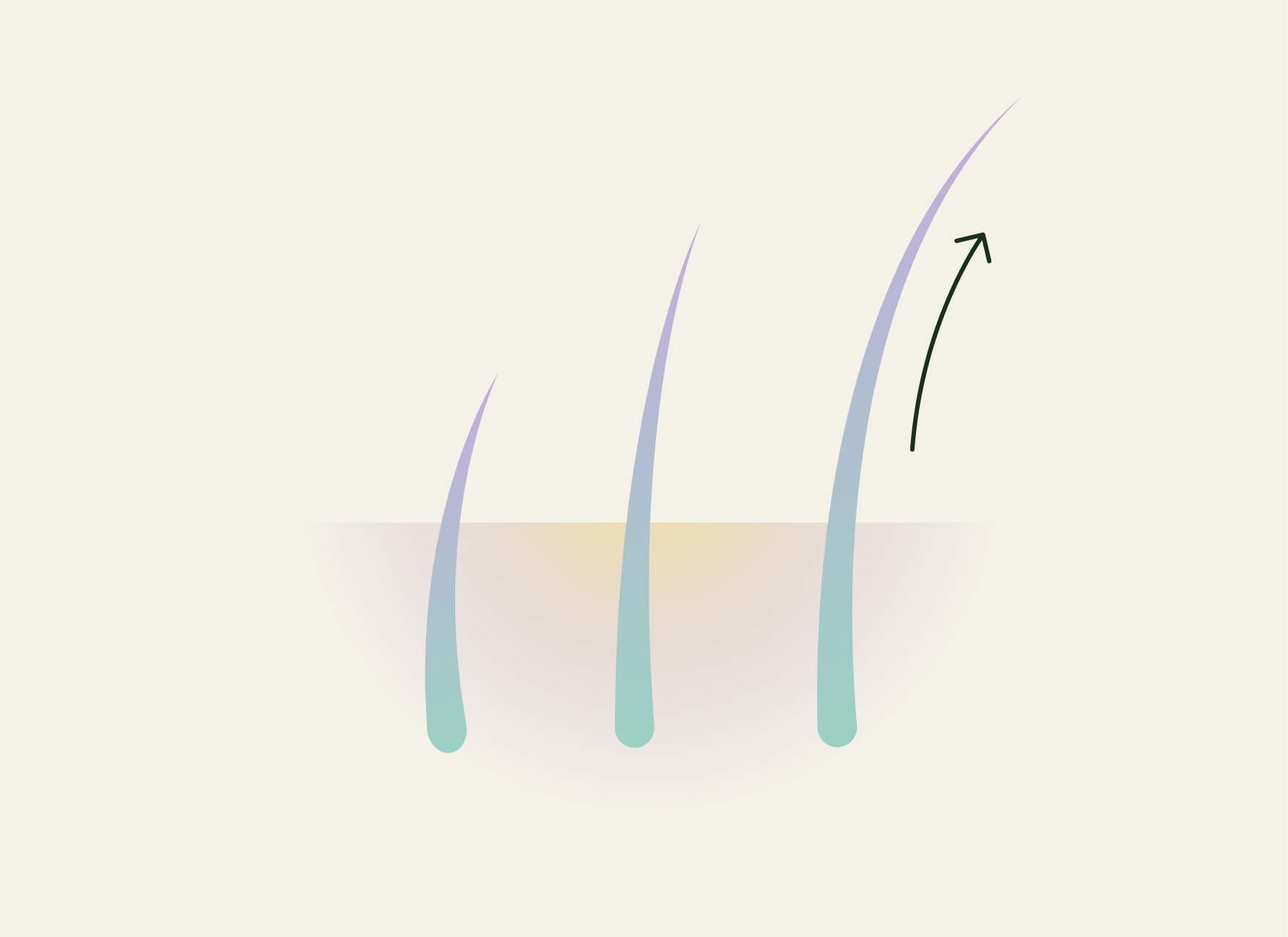
The link between PCOS and hair loss comes down to those androgens, particularly a hormone called dihydrotestosterone (DHT), a derivative of testosterone. DHT binds to receptors in hair follicles, causing them to shrink, meaning strands grow back thinner and shorter with each cycle until growth slows or stops altogether.
Insulin resistance, which is common in women with PCOS, can also amplify androgen production, which is why managing hormonal factors is important for getting symptoms under control.
What does PCOS hair loss look like?
Rather than coming out in clumps or causing patchy bald spots, PCOS hair loss typically presents as a gradual, diffuse thinning.
You might notice:
- A widening parting or visible scalp along the centre of your head
- Thinning at the crown or top of the scalp
- Hair that feels finer than it used to
- More hair shedding than usual in the shower or on your brush
- A ponytail that feels noticeably thinner
It's worth noting that in PCOS, hair loss doesn’t result in a receding hairline in most cases.
PCOS hair loss treatment options
Luckily, you don’t have to just put up with PCOS hair loss. There are several treatments that can make a meaningful difference.
Minoxidil
Minoxidil is one of the most well-established treatments for hair loss in women and is often the first thing experts recommend. Applied directly to the scalp, it prolongs the hair growth phase and stimulates blood flow to follicles.
Minoxidil for women is usually available in 2% or 5% formulations, and many women see a meaningful reduction in shedding within 3 to 6 months.
Topical minoxidil is the only licensed treatment for female pattern hair loss in the UK.
Hair thinning isn’t something you have to just accept
Voy’s science-backed treatments are designed to help reduce shedding and support fuller-looking hair over time. Take our hair assessment to find the plan that’s right for you.
Natural approaches
Many women are curious about how to tackle PCOS hair loss without medications. Lifestyle changes can really help if you have PCOS.
Regular exercise and a diet low in refined sugars and processed foods can help improve insulin sensitivity, which may, in turn, help reduce androgen levels. Managing chronic stress matters too, since elevated cortisol can worsen hormonal imbalances and directly trigger additional hair shedding (a condition called telogen effluvium).
Is PCOS hair loss reversible?
With the right treatment, many women with PCOS do see real improvement in their hair, particularly when treatment begins early, before follicles are permanently affected.
Hair follicles that are still active can recover and produce thicker strands as androgen levels are brought under control.
PCOS hair loss regrowth: What to expect
Hair grows slowly—typically around 1–1.5cm per month—so patience is really important here.
Many women who begin effective hair loss treatment start to notice reduced shedding within three to six months, with significant visible regrowth taking six to twelve months or longer.
How to stop PCOS hair loss
You don't have to simply accept thinning hair as part of living with PCOS. Our experts at Voy can put together a science-backed plan to get your hair back.
If you're concerned about hair loss and suspect PCOS may be a factor, speak to your GP, who will assess you appropriately.
Take Voy’s hair loss quiz to get started.