
















Arrone, Louis J., et al. “Continued Treatment with Tirzepatide for Maintenance of Weight Reduction in Adults with Obesity.” JAMA, vol. 331, no. 1, 2023, pp. 38–48. pmc.ncbi.nlm.nih.gov/articles/PMC10714284/.
Picture this: you’ve cut out takeaways and have been eating well for months. You’ve even started swimming three times per week. You feel great—yet the numbers on the scale haven’t moved.
It’s something we hear all the time at Voy: I’m making all these positive changes, so why aren’t I losing weight?
There’s a few possible explanations here, and understanding them can help you decide how to move forward. We’ve broken them down for you below.
But before we get into it, we just want to say: every weight loss journey has its ups and downs, and progress plateaus are common. You might be Googling " How much weight can I lose in a month ?", but it’s a marathon not a sprint. We know it's super demoralising when the scale doesn’t reflect your hard work, but it doesn’t mean you’re not making progress. Weight can fluctuate and plateaus happen, and our expert team is here to help you understand what’s going on and make a clear plan to move forward. Keep going, we’ll support you every step of the way.
Treatment management
Side effects, dose changes, storage questions. Sign up to our monthly newsletter "Your Monthly Dose", a two-minute read on the clinical updates and the news worth knowing.
By entering I agree to the Terms and Conditions.
Why am I not losing weight in a calorie deficit?
To lose weight, you need to burn more calories than you consume. A calorie deficit is what moves the needle on the scale, but real-life factors can make it harder to achieve consistently.
The most common reason is that your body's energy needs go down as you lose weight. A smaller body burns fewer calories day to day, so the deficit you started with gradually gets smaller. Eventually, the calories that once put you in a deficit are just enough to maintain your weight, and the scale stops moving. This is what's known as a plateau.
Our TDEE calculator can help you recalculate your current daily calorie needs.
Your personalised results
Enter your details to calculate your TDEE
Plateaus can also happen for subtler reasons. Slightly larger portions, a bit more snacking, or less movement than usual can all close the gap, even when it feels like nothing has changed. Hunger signals tend to increase during weight loss too, as your body tries to protect its weight, which makes consistency harder. GLP-1 medications help here by dampening those hunger hormones, so food feels steadier as your weight lowers.
For more on how metabolism shifts over time, take a look at our article on metabolic age.
Why am I not losing weight when I exercise?
Exercise is a super important part of a healthy lifestyle and maintaining our muscles during weight loss. Though research shows that on its own, it doesn’t always lead to weight loss.
Yes, moving your body means that you’re using more energy—but people do tend to compensate for that by eating more to meet those needs.
Plus, we don’t actually burn a huge amount of calories from exercise itself. For example, someone with a lower level of fitness who was exercising intensely for an hour might burn 250 calories in the session—which you could eat in a matter of minutes.
That doesn’t mean you should skip your workouts, though! Exercise helps keep you strong and healthy: it reduces your risk of illness, improves sleep and mental health, and more. It also plays an important role in weight loss by maintaining or building muscle mass, which improves metabolic health. This means you burn more energy outside of your workouts and are better able to maintain your weight once you reach your goal.
Try to do at least 150 minutes of moderate-intensity movement (like hiking or cycling) plus two strength sessions per week.
Curious about weight loss medications?
They can be a gamechanger when exercise and diet aren’t giving you the results you’d hoped for. Voy’s weight loss treatment combines science-backed medicines with a team of health experts cheering you on. Find out if it’s right for you today.
Science-backed treatment
Clinical support
Trusted by 100,000 UK customers
Weight loss and alcohol
Raising a glass now and again probably won’t have much of an impact on your weight. But because alcoholic drinks tend to be high in calories, enjoying them more regularly might. Moderate drinking can also increase appetite, which may lead you to eat more. Overall, this can cause a gradual increase in calorie intake, shifting your energy balance toward a plateau rather than continued weight loss.
Finally, having a few drinks can mess with your sleep, which also influences weight loss (more on that below).
Weight loss and health conditions
Some health issues can cause weight gain—and make extra pounds harder to lose.
Hypothyroidism
Also known as an underactive thyroid, a gland whose job is to produce hormones that control your metabolism. When your thyroid doesn’t produce enough of said hormones, it can disrupt important processes like fat burning and the rate at which your body uses energy. Ultimately, this can lead to weight gain.
You can check your thyroid health with a blood test from Voy.
Polycystic ovary syndrome (PCOS)
There are three main features of PCOS. It can cause irregular periods and excess levels of too many “male” hormones, aka androgens. High androgen levels can contribute to weight gain around the middle. With PCOS, your ovaries may also become enlarged and contain many follicles (fluid-filled sacs) that surround the eggs.
But it’s estimated that most people with PCOS also have insulin resistance, where the body becomes less sensitive to the effects of insulin. This means that less sugar can be absorbed from the blood and used as energy— and the excess sugar can then be stored as fat.
Insulin resistance and diabetes
Insulin resistance is also linked to diabetes (it’s usually associated with type 2) and can be a condition on its own. It contributes to weight gain in the way we explained above.
Medications that cause weight gain
And then there are certain medications that can bring on weight gain as a side effect. Some antipsychotics, antidepressants, and blood pressure medicines fall into this category.
In some cases, there might be an alternative treatment you can try. Speak with your provider for advice, as each person may respond differently to these medications.
Sleep and weight loss
Did you know that how well you sleep can affect your weight, too? Yep—when you’re deprived of sleep, it affects hormones which control your appetite.
The result is that you’re more likely to crave high-calorie options and eat more, possibly to try and ease your fatigue. Plus, when you’re tired, it’s harder to exercise self-control. That means you’re more likely to cave in to those impulses.
Poor sleep is also linked to a reduced metabolic rate, which means that you’re burning fewer calories—so, it’s harder for you to lose weight.
Looking to start your weight loss journey?
Take a quick eligibility quiz to explore your options and see how we can support you.
Looking to maximize your weight loss results? Don't miss our must-read blog: How Much Weight Can I Lose in a Month?!
Other reasons you can’t lose weight
You’re stressed
You’ve probably heard of cortisol, the hormone that’s released when you’re stressed. When its levels are high, this can promote the build-up of fat around your middle and bring on cravings for comfort foods—i.e. those high in fat and sugar. Stress can also impact your weight, influencing both weight gain and loss depending on how your body responds.
You aren’t staying consistent
Losing weight is a long game. To see results, you have to repeat the same healthy behaviours, again and again. And if your motivation dips for whatever reason, you might stray from your path.
Try to come up with a plan that’s realistic and gels with your schedule, keeping in mind that a safe and sustainable weight loss is around 4-8 pounds in a month. Hold yourself accountable for keeping it up, stay consistent, and trust the process—we know that you can do it
Could weight loss medications help?
If anything we’ve just said struck a chord with you, we get it—losing weight can be super tough, especially when you’re trying your best but aren’t getting results.
Weight loss medications can be a good option here if a healthcare provider says they are suitable for you, especially as obesity rates climb in the UK and traditional methods fall short for many.
These medications work by making you feel full, so you eat less. But they’re not a quick fix. You’ll still need to address the lifestyle factors we mentioned above and remain in a calorie deficit. When taken alongside changes to your diet and regular exercise, some people report losing up to 25% of their starting weight.
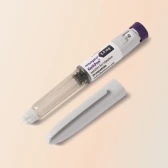
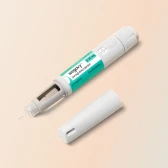
At Voy, you’ll get weekly medication, like Mounjaro or Wegovy, plus support from our team and access to an app to follow your progress, as part of our weight loss treatment. And we’ll be right here with you the whole time, cheering you on! Find out if you’re eligible by filling out this short form. We’ll let you know within minutes.
DisclaimerAt Voy, we ensure that everything you read in our blog is medically reviewed and approved. However, the information provided is not meant to replace professional medical advice, diagnosis, or treatment. It should not be relied upon for specific medical advice.
References

Benton, David, and Hayley A. Young. “Reducing Calorie Intake May Not Help You Lose Body Weight.” Perspectives on Psychological Science, vol. 12, no. 5, 2017. journals.sagepub.com/doi/10.1177/1745691617690878.
Caudwell, Phillipa, et al. “Exercise Alone Is Not Enough: Weight Loss Also Needs a Healthy (Mediterranean) Diet?” Public Health Nutrition, vol. 12, special issue 9A, 2009. www.cambridge.org/core/journals/public-health-nutrition/article/exercise-alone-is-not-enough-weight-loss-also-needs-a-healthy-mediterranean-diet.