















Almohanna, Hind M., et al. “The Role of Vitamins and Minerals in Hair Loss: A Review,” Dermatology and Therapy, vol. 9, issue 1, 2018:51-70. https://pmc.ncbi.nlm.nih.gov/articles/PMC6380979/#Sec1.
Do your locks seem thinner lately? It’s not just you: up to half of women will experience hair loss at some point. And it becomes more common during menopause.
Here’s what to know about menopause and hair loss.
Key Takeaways
- Hormonal shifts during menopause can lead to hair loss.
- But this isn’t the only contributing factor: your genes and lifestyle can also play a role.
- Medical treatments and lifestyle changes may help.

Does menopause cause hair loss?
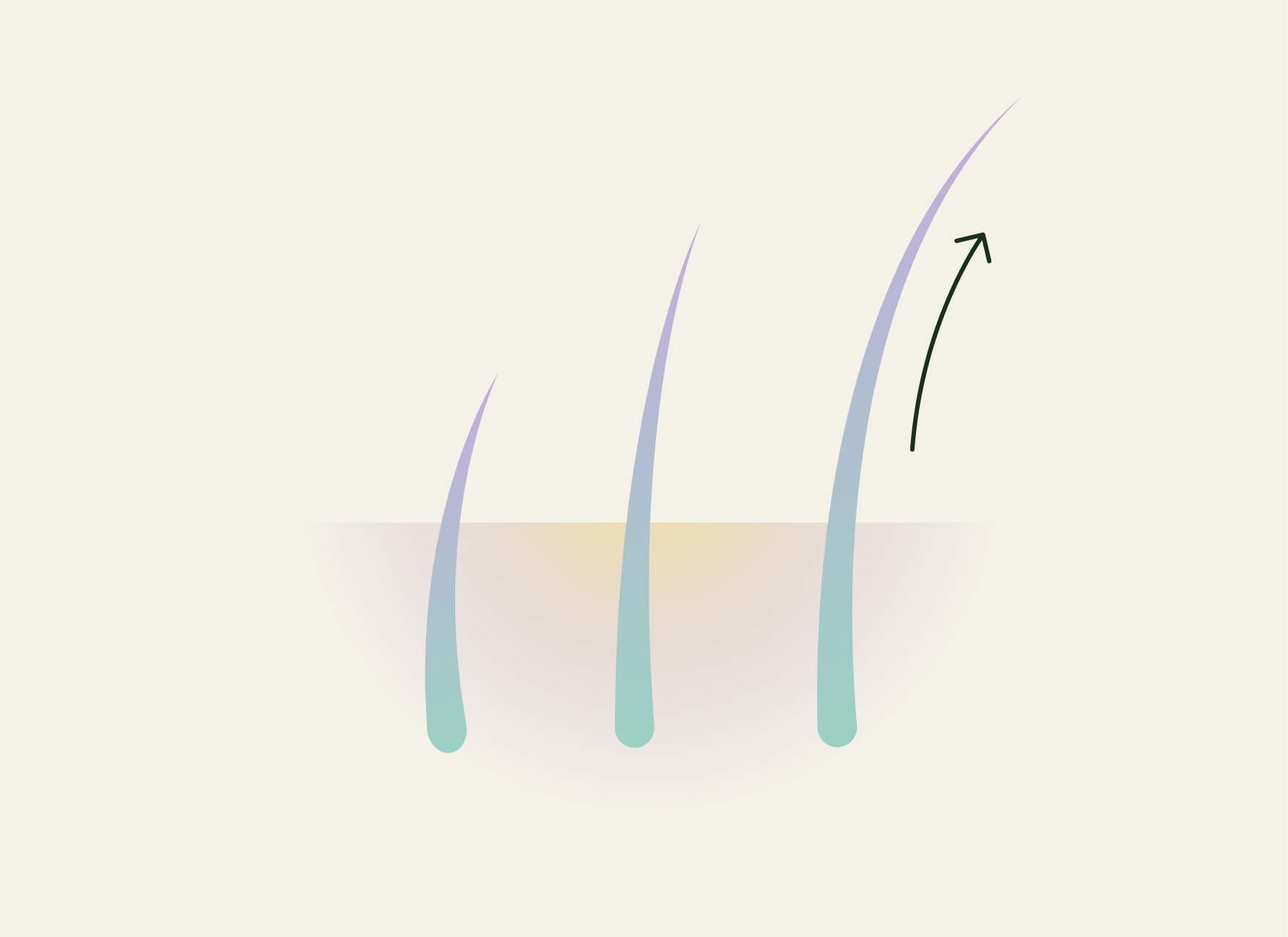
Yes, it can. Hormonal shifts during menopause can alter your hair growth cycle, leading to shedding.
But this isn’t the only factor contributing to hair loss during this time. Your genes and lifestyle also play a role.
How long does menopause hair loss last?
You can’t change your genes or reverse the biological changes that happen during menopause. So, unless you treat it, hair loss due to those factors is generally there to stay.
But if your lifestyle or habits are the culprit, you may be able to remove the root cause. Here, regrowth might happen within a few months.
What causes hair loss during menopause?
Let’s dive in.
Hormone shifts
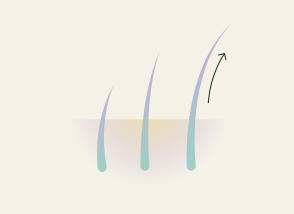
Oestrogen drops in the run-up to menopause, which shifts the ratio between oestrogen and androgens (male hormones). You would then have more androgens, including one called DHT, in relation to oestrogen than you did before. DHT causes your hair follicles to shrink over time, so your hair becomes thinner and less dense.
Plus, oestrogen acts on hair follicles and extends the growth phase of your hair cycle. Its declining levels are thought to play a role in hair loss, but we still aren’t entirely sure how.
Your genes
Hair loss is also related to your genes. Women with female pattern hair loss (aka hereditary hair loss) may be more sensitive to the effects of DHT. If you’re trying to understand the bigger picture, it’s worth exploring the main causes of hair loss in women—including whether shampoo can cause hair loss in women.
Stress
Sometimes, stressful events (like going through a breakup) can disrupt your hair growth cycle and cause temporary shedding. But usually, your hair will grow back within a matter of months.
What does menopausal hair loss look like?
With hair loss due to genetic predisposition and hormones, you'll typically notice thinning across the top of your scalp first. You might notice that your center part becomes wider. Hair loss may then slowly spread outwards (though the hairline is generally preserved).
If your hair loss is temporary, for example due to stress or illness, it can shed from all over the scalp. Here, it might feel like your hair is getting less dense overall, rather than coming out in patches or a specific pattern.
Hair thinning isn’t something you have to just accept
Voy’s science-backed treatments are designed to help reduce shedding and support fuller-looking hair over time. Take our hair assessment to find the plan that’s right for you.
Treatments for menopausal hair loss
The good news is that there’s treatment available for hair loss during menopause.
Minoxidil
Minoxidil is the only medicine licensed for female pattern hair loss in the UK. It boosts blood flow to the hair roots, which can encourage growth. Research shows that it can improve hair count and scalp coverage in women.
What else helps with menopausal hair loss?
These things might help, too.
- Eat well. Some nutritional deficiencies are linked to hair loss (like protein and iron) while a healthy, balanced diet keeps your hair strong and healthy. For some women, targeted supplementation like hair vitamins can help avoid deficiencies.
- Be kind to your hair. Harsh hair treatments or styling can make your hair break and fall out.
- Try microneedling. Studies suggest this can stimulate hair growth, and can be even more effective when combined with minoxidil.
Will hair loss from menopause grow back?
Happily, it’s possible for your hair to grow back.
- If you have female pattern hair loss, medical treatments like minoxidil can help.
- Hair loss due to stress is usually temporary.
- Removing the root cause of hair loss, such as a poor diet, can drive regrowth within months.
- There’s some research supporting use of oestrogen HRT to treat hair loss, but more evidence is needed. It’s not usually prescribed for hair loss alone.
When to see your doctor
If your hair loss is bothering you, that’s enough of a reason to see your doctor.
Yet if it comes on suddenly, your hair is falling out in clumps, or you have other symptoms like an itchy scalp, it’s best to check in with them. These could be signs of infection or another underlying health issue.
Feel like yourself again
There’s help available for hair loss. Our industry-leading experts at Voy can make you a personalised plan to get your hair back.