














Weight Loss
Menopause
menu-close
WHAT WE TREAT
Weight loss
icon
Menopause
icon
ACCOUNT
Log in
icon
OVERVIEW
Weight loss overview
icon
TREATMENTS
Explore all options
Explore all options
icon
Mounjaro
Mounjaro
Lose up to 23% body weight
icon
Wegovy
Wegovy
Lose up to 21% body weight
icon
Saxenda
Saxenda
Lose up to 10% body weight
icon
Orlos
Orlos
Lose up to 8% body weight
icon
PROGRAMME
How it works
How it works
icon
App
App
icon
ABOUT
Results
icon
Experts
icon
RESOURCES
Guides & tips
icon
ACCOUNT
Log in
icon
GET IN TOUCH
020 3912 9885
Mon-Fri 9:00-17:30
icon
OUR CLINIC
Menopause overview
icon
Pricing
icon
Specialists
icon
TREATMENT PLANS
Hormone replacement therapy
icon
Testosterone treatment
icon
Cognitive behavioural therapy
icon
Vaginal treatments
icon
BLOOD TESTS
Women's midlife (MOT) blood test
icon
Check your HRT and testosterone test
icon
Start testosterone blood test
icon
WHAT WE TREAT
Skincare
New
icon
Perimenopause
icon
Menopause
icon
ADHD and menopause
icon
Premenstrual Dysphoric Disorder (PMDD)
icon
LEARN
Guides
icon
Treatments
icon
ACCOUNT
Log in
icon
SUPPORT
FAQ
icon
Hair loss

How to stop hair loss in men

Male pattern baldness is extremely common, but there are effective treatments that can stop hair loss.

clinician image

Medically reviewed by

Dr Earim Chaudry (MBBS), Chief Medical Officer

iconPublished 12th December 2025

Around 80% of men in the UK will experience hair loss. But that doesn’t mean you have to sit back and watch it happen.

Evidence-based medications like finasteride and minoxidil can stop hair loss and promote regrowth. And if other factors are contributing, lifestyle changes may help address those too. Read on to learn more.

Key Takeaways

  • Male pattern baldness affects around 80% of men
  • Finasteride and minoxidil are proven medications that can stop hair loss and promote regrowth
  • Other causes like stress, nutritional deficiencies, and medical conditions may be reversible
  • Results from any treatment take 3-6 months to become visible
  • Healthy diet and gentle hair care habits can support overall hair health

What actually causes hair loss?

Several factors can contribute to male hair loss.

Genetics: This is the most common cause in men. Around 80% of men will experience male pattern baldness at some point in their lives.

Stress: A stressful event (like going through a major life change) can cause temporary hair shedding called telogen effluvium

Medical conditions: Alopecia areata, thyroid disorders, and autoimmune conditions can cause hair loss.

Medications: Some antidepressants and other medicines list hair loss as a side effect.

Nutritional deficiencies: Low levels of iron, protein, zinc, or essential fatty acids can affect hair growth.

Hair care habits: Excessive heat styling, tight hairstyles, harsh chemicals, and over-brushing can damage hair and cause breakage.

Can you really stop hair loss (and when is it reversible)?

It depends on the cause.

Reversible hair loss happens when you can identify and remove the root cause:

  • Correcting a nutritional deficiency
  • Treating an underlying medical condition
  • Adjusting your hair care routine
  • Switching medications that cause hair loss
  • Managing stress levels

However, it will take a few months for your hair to regrow. For example, if stress is the culprit, your hair will usually grow back within 3-6 months.

Male pattern baldness is different. Because it's genetic, you can't reverse the underlying cause. However, you can effectively manage it with proven medications like finasteride and minoxidil. These treatments can stop further loss and promote regrowth, even though they don't "cure" the genetic predisposition.

How to stop hair loss and prevent further thinning

Using medication

Most men will see an improvement on minoxidil or finasteride.

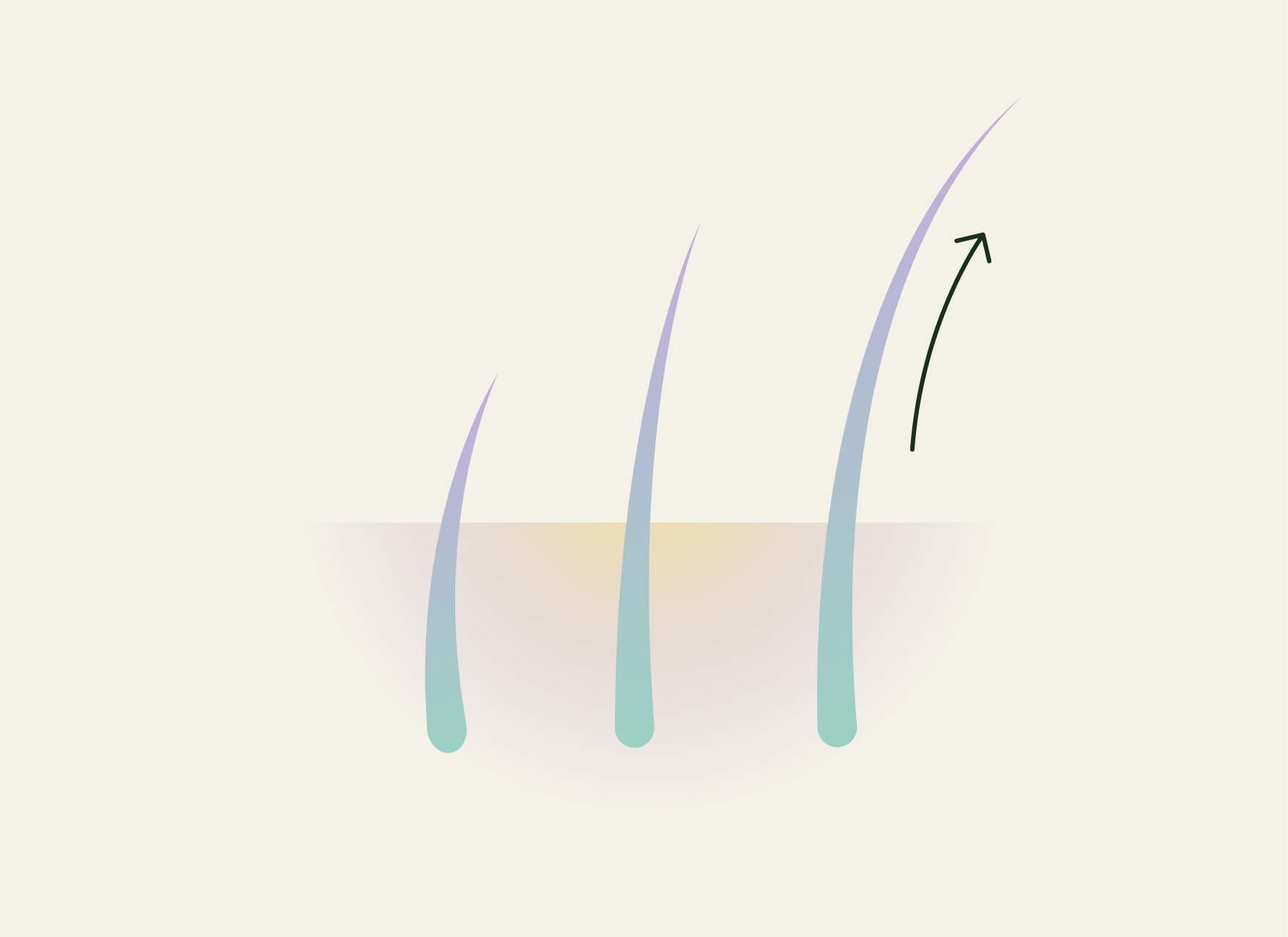
Minoxidil encourages growth by increasing blood flow to the hair roots. Finasteride works differently: it lowers levels of DHT, a hormone that causes your hair follicles to shrink until hair eventually stops growing.

Both medicines can increase hair count and drive regrowth on the front and crown of the scalp.

Discover hair loss treatments
Struggling with thinning hair or a receding hairline? Our exclusive, science-backed formulas are proven to slow down hair loss and help regrowth.
icon
Trusted by over 500,000 men
icon
Science-backed formulas you can’t get elsewhere
icon
Effective in 9 out of 10 men using our combined approach

Eat a healthy diet

A healthy, balanced diet supports hair health and growth. Deficiencies in these nutrients have been linked to hair loss:

Protein – It's recommended you get at least 0.8g/kg body weight per day. Sources include lean meat, fish, eggs, and legumes.

Iron – Found in lean meat and seafood, nuts, beans, and spinach.

Zinc – Found in meat, fish, seafood, and fortified cereals.

Omega-3 and omega-6 fatty acids – Found in oily fish, flaxseed, soybeans, and chia seeds.

Thinking of trying supplements? Check with your provider first to make sure they won't interfere with your medications or treatment plan.

Change your hair care habits

Gentle hair care can reduce unnecessary breakage and shedding.

To reduce damage:

  • Avoid excessive brushing or pulling
  • Limit heat styling tools
  • Go easy on chemical treatments like bleaching and frequent hair dye
  • Avoid very tight hairstyles that pull on the hairline
  • Use a wide-toothed comb on wet hair

These changes won't treat male pattern baldness, but they can help prevent additional breakage.

How long does it take for hair loss to stop?

Hair growth is slow. Even when treatment is working, it takes 3-6 months before new hairs grow long enough to be visible.

This timeline applies whether you're:

  • Using finasteride or minoxidil
  • Correcting a nutritional deficiency
  • Recovering from stress-related shedding
  • Treating an underlying medical condition

Patience is essential. Hair loss medications start working immediately at the cellular level, but visible results take time.

Ready to regain your confidence?
Take the hair quiz today and we’ll recommend a treatment plan designed to stop hair loss and power regrowth.

When to see a doctor about hair loss

If you're concerned about hair loss, that's reason enough to see your GP or a healthcare provider. You should definitely seek medical advice if you experience:

  • Burning, stinging, or pain on your scalp
  • Scaly skin with sores or blisters
  • Redness and swelling
  • Sudden, patchy hair loss
  • Hair loss accompanied by other symptoms

These signs could indicate an infection, inflammatory condition, or other medical issue requiring treatment.

Get your hair back

Interested in trying hair loss treatment? We've got you.

At MANUAL, we create personalised, science-backed plans to stop hair loss and drive regrowth. Our clinicians can prescribe finasteride, dutasteride, minoxidil, or a combination based on your individual needs.

Take our quiz to get started.
FAQ

How to stop hair loss in men: FAQ

DisclaimerAt MANUAL, we ensure that everything you read in the Health Centre is medically reviewed and approved. However, the information provided is not meant to replace professional medical advice, diagnosis, or treatment. It should not be relied upon for specific medical advice.
References
icon¹

“Androgenic Alopecia: A Systematic Review and Meta-analysis,” Aesthetic Plastic Surgery,scribble-underline vol. 44, 2020:962-970. https://link.springer.com/article/10.1007/s00266-020-01621-5.

icon²

Asghar, Fahham, et al. “Telogen Effluvium: A Review of the Literature,” Cureusscribble-underline, vol. 12, issue 5, 2020:e8320. https://pmc.ncbi.nlm.nih.gov/articles/PMC7320655/.

icon³

Guo, Emily L., and Katta, Rajani. “Diet and Hair Loss: Effects of Nutrient Deficiency and Supplement Use,” Dermatology Practical and Conceptualscribble-underline, vol. 7, issue 1, 2017:1-10 https://pmc.ncbi.nlm.nih.gov/articles/PMC5315033/.

icon⁴

Gupta, Aditya, et al. “Relative Efficacy of Minoxidil and the 5-α Reductase Inhibitors in Androgenic Alopecia Treatment of Male Patients, a Network Meta-analysis,” JAMA Dermatologyscribble-underline, vol. 158, no. 3, 2022:266-274. https://pmc.ncbi.nlm.nih.gov/articles/PMC8811710/.

icon⁵

Gupta, A K., et al. “Minoxidil: A Comprehensive Review,” Journal of Dermatological Treatment,scribble-underline vol. 33, issue 4, 2022:1896-1906. www.tandfonline.com/doi/10.1080/09546634.2021.1945527.

icon⁶

Hagenaars, Saskia P, et al. “Genetic Prediction of Male Pattern Baldness,” PLoS Geneticsscribble-underline, vol. 13, issue 2, 2017:e1006594. https://pmc.ncbi.nlm.nih.gov/articles/PMC5308812/.

icon⁷

"How and When to Take Ferrous Sulfate," NHS, 9 February 2023. https://www.nhs.uk/medicines/ferrous-sulfate/how-and-when-to-take-ferrous-sulfate/ Accessed 11 Dec. 2025.

icon⁸

Hu, Ruiming, et al. “Combined Treatment with Oral Finasteride and Topical Minoxidil in Male Androgenetic Alopecia: A Randomized and Comparative Study in Chinese Patients,” Dermatologic Therapyscribble-underline, vol. 28, issue 5, 2015:303-308 https://onlinelibrary.wiley.com/doi/abs/10.1111/dth.12246.

icon⁹

Kim, Jino, et al. “Recent Advances in Drug Development for Hair Loss,” International Journal of Molecular Sciencesscribble-underline, vol. 26, issue 8, 2025:3461 https://pmc.ncbi.nlm.nih.gov/articles/PMC12026576/.

icon¹⁰

Olsen, Elise A., et al. “Global Photographic Assessment of Men Aged 18 to 60 Years with Male Pattern Hair Loss Receiving Finasteride 1mg or Placebo,” Journal of the American Academy of Dermatologyscribble-underline, vol. 67, issue 3, 2012:379-386 https://www.jaad.org/article/S0190-9622(11)01184-4/abstract.

icon¹¹

Phillips, T Grant, et al. “Hair loss: Common Causes and Treatment,” American Family Physician,scribble-underline vol. 96, issue 6, 2017:371-378. https://www.aafp.org/pubs/afp/issues/2017/0915/p371.html.

icon¹²

Wu, Guoyao. “Dietary Protein Intake and Human Health,” Food and Functionscribble-underline, issue 3, 2016 https://pubs.rsc.org/en/content/articlelanding/2016/fo/c5fo01530h.

icon¹³

“Hair Loss: Signs and Symptoms,” American Academy of Dermatology Associationscribble-underline. https://www.aad.org/public/diseases/hair-loss/insider/begin. Accessed 3 Dec. 2025.

icon¹⁴

“Hair Loss Types: Alopecia Areata Diagnosis and Treatment.” American Academy of Dermatology Association.scribble-underline https://www.aad.org/public/diseases/hair-loss/types/alopecia/treatment Accessed 3 Dec. 2025.

icon¹⁵

“Male Pattern Hair Loss (Male Androgenic Alopecia): How Common is Male Pattern Hair Loss?”, Clinical Knowledge Summary, National Institute for Health and Care Excellencescribble-underline, 2022. https://cks.nice.org.uk/topics/male-pattern-hair-loss-male-androgenetic-alopecia/background-information/prevalence/. Accessed 3 Dec. 2025.

icon¹⁶

“Telogen Effluvium,” British Association of Dermatologists,scribble-underline www.bad.org.uk/pils/telogen-effluvium. Accessed 3 Dec. 2025.

card-image
Hair loss
Finasteride and minoxidil
Here’s what to know about using both hair loss medicines at once.
card-image
Hair loss
What helps hair growth in men?
Here’s what research shows actually boosts hair growth in men.
card-image
Hair loss
How to use topical minoxidil
It’s easy to get started with minoxidil. Here’s how.
Have a question?
phone icon
020 3912 9885Monday - Friday 9am - 5pm
support icon
help@joinvoy.comWe aim to reply in 24hrs
email icon
press@joinvoy.comPress & media inquiries
Our services are not intended for use in a medical emergency. If you need urgent medical attention, please call 111 or 999.

Women

  • Weight Loss
  • Menopause

Men

  • Weight Loss
  • Testosterone

Prevention

  • Do Health

Legal

  • Privacy policy
  • Terms & Conditions
  • Terms of Sale
  • Complaints

Get help

  • Help Centre (FAQ)
facebooktwitterinstagram
Copyright 2025 Voy. All rights reserved.
Pharmacies: Manual PharmacySuperintendent Pharmacist: Dawn NeilGPhC Registration: 2063362
registered pharmacycqc ratingcpd member