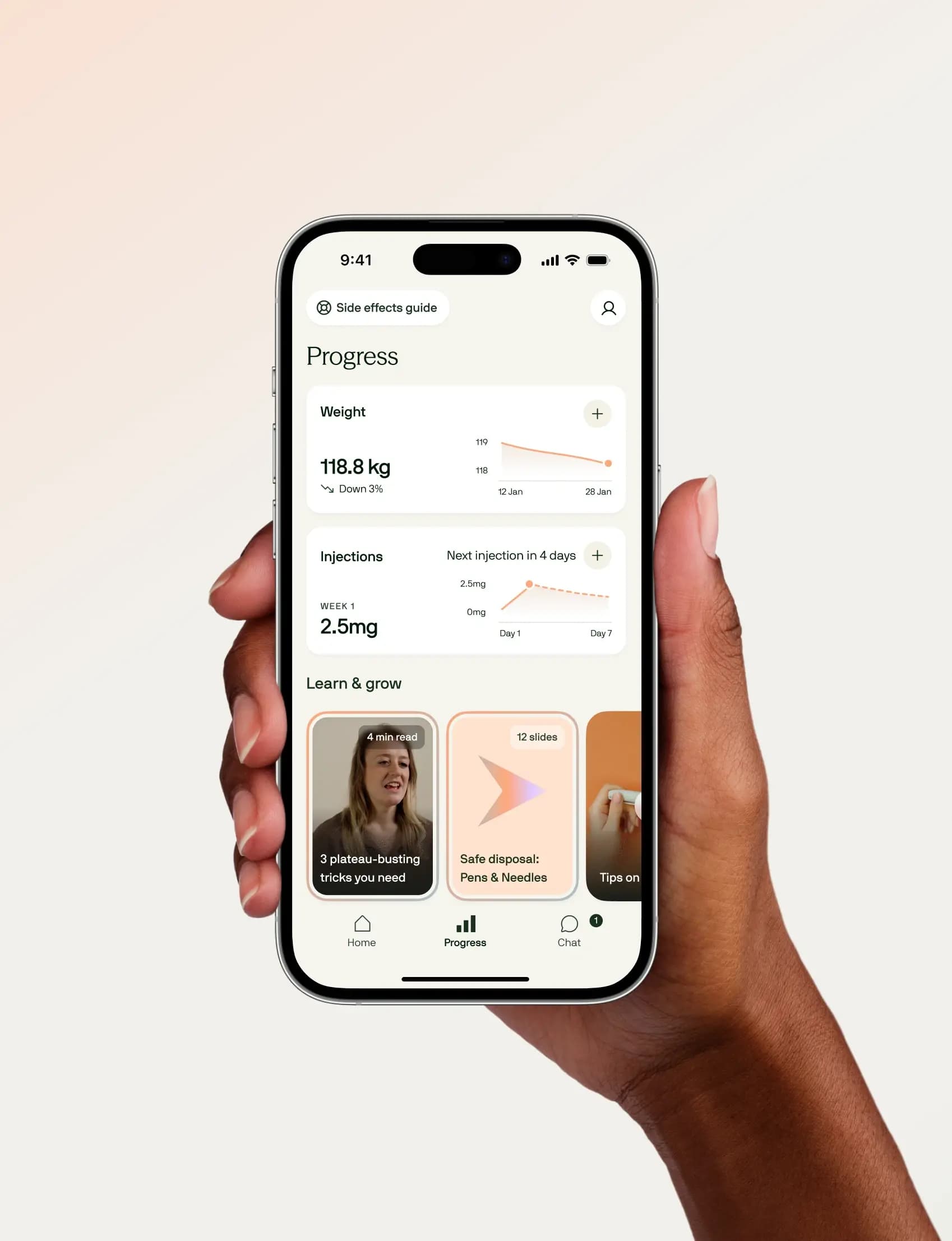
















What is Mounjaro?
Mounjaro is a prescription-only medication manufactured by Eli Lilly for weight management and type 2 diabetes. It is a once-weekly subcutaneous (under the skin) injection that contains the active ingredient tirzepatide.
Tirzepatide mimics two important gut hormones: GLP-1 (glucagon-like peptide-1) and GIP (glucose-dependent insulinotropic polypeptide). These hormones work together to reduce appetite, help you feel fuller for longer, slow stomach emptying, and improve blood sugar control. This dual mechanism makes Mounjaro different from other weight loss injections like Wegovy, which only target the single hormone GLP-1.
Mounjaro has been clinically proven to deliver significant weight loss results, making it one of the most effective prescription weight loss treatments available.
How does Mounjaro work in the body for weight loss?
Mounjaro works by mimicking two naturally occurring gut hormones that regulate appetite, blood sugar, and metabolism. Understanding how these hormones work helps explain why Mounjaro is so effective for weight loss.
What is GLP-1?
GLP-1 (glucagon-like peptide-1) is a hormone your gut releases after eating. It plays a key role in controlling appetite and blood sugar.
GLP-1 slows how quickly the stomach empties, helping meals feel more satisfying and keeping you fuller for longer. It also sends signals to the brain that reduce appetite and curb cravings.
After eating, GLP-1 boosts insulin release as blood sugar rises and suppresses glucagon, a hormone that would otherwise raise your blood sugar between meals. This helps keep energy levels steady throughout the day.
By activating the GLP-1 receptor, Mounjaro helps you feel satisfied with smaller portions and makes it easier to stick to a reduced-calorie diet.
GLP-1 is the same receptor targeted by Wegovy (semaglutide), but Mounjaro goes further by also activating a second hormone pathway.
What is GIP?
GIP (glucose-dependent insulinotropic polypeptide) is another gut hormone that works alongside GLP-1 to regulate metabolism and appetite.
GIP helps the body use insulin more effectively after meals, allowing blood sugar levels to settle more smoothly. In the brain, GIP signals can dampen appetite, making it easier to feel satisfied with smaller portions.
Mounjaro is currently the only licensed weight-loss medicine that activates the GIP receptor (as well as GLP-1).
Is Mounjaro licensed and prescribed in the UK?
Yes, Mounjaro is fully licensed in the UK. It was originally approved for treating type 2 diabetes, and in November 2023, the Medicines and Healthcare products Regulatory Agency (MHRA) extended its license to include weight management for adults aged 18 and over.
Because Mounjaro is a licensed medication, it can be legally prescribed by doctors and healthcare professionals in the UK, either through the NHS or privately.
This makes Mounjaro one of only a few prescription weight loss treatments officially approved by UK regulators, offering proven benefits for both weight management and blood sugar control.
Can you get mounjaro on the NHS?
Mounjaro is available on the NHS, but the eligibility criteria for weight management are very strict.
You may be eligible for Mounjaro through your GP or a specialist weight management service if:
- Your BMI is 40 or more, and
- You have at least 4 of the following weight-related conditions:
- Type 2 diabetes
- High blood pressure (hypertension)
- Heart disease (cardiovascular disease)
- Abnormal blood fats (dyslipidaemia)
- Obstructive sleep apnoea
If your BMI is below 40 but you meet the above criteria, you may still be eligible depending on your ethnicity. People from certain ethnic backgrounds have an increased risk of health conditions at lower BMIs.
In practice, many people who could benefit from Mounjaro don't meet these strict NHS criteria, which is why most patients access it through private providers like Voy.
What results can you expect with Mounjaro?
Voy members lose 21.55% of their body weight on average in 10 months. This data comes from a clinical study of 57,975 Voy participants in partnership with Imperial College London, one of the largest real-world analyses of weight loss medication outcomes conducted in the UK.
Weight loss with Mounjaro varies from person to person. Your individual outcome depends on several factors:
- Lifestyle changes: Mounjaro works best alongside a balanced diet and regular physical activity
- Consistency: Taking your prescribed dose every week without missing injections
- Side effect management: Working with your clinical team to manage any side effects so you can stay on treatment
- Dose and duration: Higher doses and longer treatment duration generally lead to greater weight loss
- Individual factors: Your medical history, other medications you're taking, and how your body responds to treatment
Real results from Voy members
Members who actively engage with their coach, use the app regularly, and receive ongoing clinical support achieve significantly better results than those without structured support.
Participants on the Voy programme lost 5 times more weight than with diet and exercise alone.

Other benefits of Mounjaro beyond weight loss
While Mounjaro is best known for weight loss, it offers several other health benefits.
Blood Sugar Control
Mounjaro is licensed to treat type 2 diabetes and has been shown to significantly improve blood sugar control.
High blood sugar can damage your nerves, kidneys, and eyes over time. It can also contribute to weight gain, as excess sugar is stored as fat. Mounjaro helps control blood sugar levels by:
- Stimulating the pancreas to produce more insulin when blood sugar rises
- Suppressing glucagon (a hormone that raises blood sugar), which reduces glucose production in the liver
- Slowing stomach emptying, which helps prevent blood sugar spikes after meals
- Improving insulin sensitivity (particularly as weight decreases)
What about prediabetes?
Mounjaro is not licensed specifically for prediabetes, but if you have prediabetes and meet the eligibility criteria for weight loss, you can be prescribed it.
Losing weight is one of the most effective ways to reverse prediabetes and prevent progression to type 2 diabetes. Mounjaro also helps reduce blood sugar levels directly, which provides additional metabolic benefits.
Clinical evidence supports this: in a 176-week study, patients taking tirzepatide had a 93% lower risk of developing type 2 diabetes compared to placebo. More than 90% of those on tirzepatide achieved normal HbA1c levels (a measure of average blood sugar over 3 months) by the end of the study.
PCOS (Polycystic Ovary Syndrome)
Mounjaro is not licensed to treat PCOS, but if you have PCOS and meet the eligibility criteria for weight loss, you can be prescribed Mounjaro.
Why weight loss helps PCOS:
PCOS creates a frustrating cycle: insulin resistance makes it harder to lose weight, and excess weight worsens insulin resistance. Losing even 5% of your body weight can help:
- Regulate menstrual cycles
- Improve fertility
- Reduce insulin resistance
- Lower testosterone levels
Because Mounjaro addresses both weight loss and insulin sensitivity, it helps break this cycle, making it easier to finally achieve the improvements in symptoms that many women with PCOS are looking for.
Heart Health and Cardiovascular Benefits
Reaching a healthier weight can significantly improve your heart health by lowering blood pressure and cholesterol levels.
Studies have shown that Mounjaro can:
- Lower blood pressure
- Reduce cholesterol levels
- Improve cardiovascular risk markers
Cardiovascular risk reduction:
Research shows promising cardiovascular benefits with Mounjaro. A 2024 study of over 7,000 participants found a 33% reduction in major cardiovascular events such as heart attack, stroke, and heart failure. This compares favourably to Wegovy (semaglutide), which showed a 20% reduction in the SELECT trial and is licensed for cardiovascular risk reduction.
Mounjaro is not yet licensed specifically for cardiovascular protection, but ongoing trials are evaluating its long-term heart health benefits.
Mounjaro doses and titration schedule
Mounjaro uses a gradual dose increase schedule, starting at the lowest dose and building up over time. This approach, called titration, helps your body adjust to the medication and minimises side effects while maximising weight loss results.
The Mounjaro dose schedule
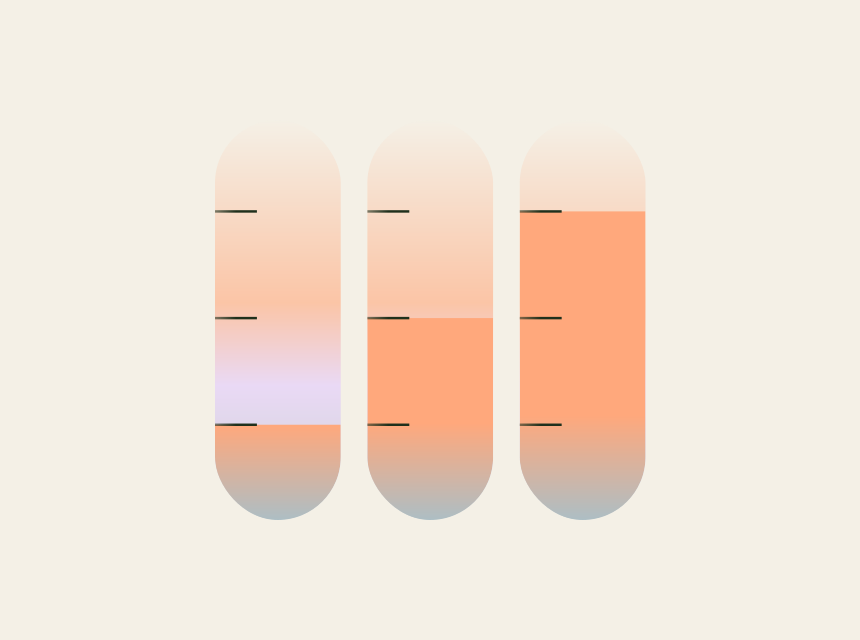
Here's what the standard Mounjaro dosing schedule looks like if you're tolerating the medication well and your dose increases every 4 weeks:
However, not everyone will reach the highest dose, and your journey may look different.
The goal is to find your stable dose, which is the dose that gives you good appetite suppression, effective weight loss, and minimal side effects. This means some people may find their optimal dose at 7.5mg, 10mg, or 12.5mg and stay there long-term without ever needing to increase to 15mg.
When your pace might differ:
Your clinician may recommend staying on your current dose longer than 4 weeks, or even reducing your dose if you experience side effects. You might also choose to remain at your current dose if you're seeing excellent results and feel no need to increase further.
Your Voy clinical team will work with you to find the right pace and dose for your individual needs.
Can you start at a higher dose?
Typically, everyone starts Mounjaro at the lowest 2.5mg dose. Here's why:
Reducing side effects: Starting low gives your body time to adjust to how Mounjaro works. Jumping straight to a higher dose significantly increases the risk of side effects such as nausea and vomiting.
Better long-term success: Increasing the dose gradually leads to fewer treatment breaks due to side effects and more consistent use, which results in better weight loss outcomes over time.
Reaching steady state: It takes about 4 weeks for Mounjaro to reach consistent levels in your bloodstream. Starting at 2.5mg ensures the medication builds up gradually and safely.
Exception: Switching from another weight loss medication
If you're switching to Mounjaro from another GLP-1 medication like Wegovy, you may be eligible to start at a higher dose to help you transition smoothly and continue your progress.
This is considered off-label prescribing. At Voy, our clinicians take your individual treatment history and the best available evidence into account to recommend the dose that will help you continue your progress safely and effectively.
Can you remain on 2.5mg?
Yes, you can remain on 2.5mg if you have adequate appetite suppression and are seeing good weight loss results. However, 2.5mg is primarily used as a starting dose to help your body adjust to the medication and reduce side effects.
Your body will likely adapt to the dose over time, which means the appetite suppression and weight loss effects will diminish. This is why most people eventually need to increase their dose to continue seeing results.
What to expect week by week on Mounjaro?
Everyone's journey with Mounjaro is different, but here's what a typical journey may look like as your body adjusts to the medication and your dose increases over time.
Weeks 1-4: Adjustment phase
What's happening: You'll typically start on 2.5mg, the lowest dose. If you're switching providers or transitioning from another weight loss injection like Wegovy, you may be able to start at a higher dose depending on your treatment history.
This first month is about getting your body used to the medication rather than seeing dramatic weight loss results.
What you might notice:
- Reduced appetite or fewer cravings (though some people don't notice anything yet)
- Feeling fuller sooner when eating
- Mild side effects like nausea, fatigue, or changes in bowel movements
Average weight loss: Around 4% of your body weight by the end of week 4.
What to focus on: Building consistent habits like injecting on the same day each week, eating balanced meals, and staying hydrated. If you experience side effects, they're usually mild and temporary. Speak to your clinical team if they're bothering you.
Weeks 5-8: Appetite suppression kicks in
What's happening: Most people increase to 5mg at the start of week 5. This is when appetite suppression becomes more noticeable and weight loss starts to accelerate.
What you might notice:
- Significantly reduced hunger between meals
- Smaller portions feeling satisfying
- Early weight loss becoming visible (clothes fitting differently)
- Side effects may temporarily increase with the dose change but usually settle within 1-2 weeks
Average weight loss: Around 6% of your body weight by week 8.
What to focus on: Continue building healthy eating and movement habits. These habits will help you maintain your weight loss long-term, even after you stop taking Mounjaro.
Weeks 9-12 and beyond: Sustained weight loss
What's happening: You may increase to 7.5mg around week 9 (if tolerating well). By 12 weeks, you should be seeing consistent, sustained weight loss.
What you might notice:
- Steady, ongoing weight loss each month
- Your new eating patterns feeling more natural and automatic
- Increased energy and improved mobility
Average weight loss: Around 9% of your body weight by week 12.
Long-term results: Clinical trials show that people lose an average of 16% at 72 weeks on 5mg, 21.4% on 10mg, and 22.5% on 15mg.
What to focus on: Stay consistent with your weekly injections, balanced diet, and regular movement. Most people need to take Mounjaro for at least a year to see optimal results and maintain their weight loss.
What is a weight loss plateau?
A weight loss plateau happens when the number on the scale doesn't change for several weeks (usually 3-4 weeks or longer), despite staying consistent with Mounjaro and your healthy habits. This is a normal part of most people's weight loss journey.
It's important to distinguish this from the natural slowing that happens after the first few weeks of treatment. Early weight loss is often quicker, and then it settles into a steadier pace. A plateau is when progress stops completely for an extended period.
Why does weight loss plateau on Mounjaro?
There are several reasons why plateaus happen:
Your body adapts to your dose: If you've been on the same dose for a while, your body may have adapted to it. The appetite suppression you felt initially can start to wear off.
Your metabolism adjusts: As you lose weight, your body needs fewer calories to function. A calorie intake that created a deficit early on may now be closer to maintenance levels.
Changes in lifestyle factors: Sleep quality, stress levels, activity levels, and hydration can all affect weight loss. Small changes in daily movement (like fewer steps) can reduce the calorie deficit you had before.
Muscle gain: If you've increased physical activity, especially strength training, you might be gaining muscle while losing fat. Muscle is denser than fat, so the scale may not move even though your body composition is improving.
Natural adaptation to calorie deficit: After prolonged calorie restriction, your body may respond by conserving energy and reducing the rate at which you burn calories.
Underlying medical conditions: Certain conditions, such as PCOS, thyroid disorders, or hormonal imbalances, can make weight loss more challenging. If you suspect a medical factor may be contributing, discuss this with your clinician.
How to break through a Mounjaro weight loss plateau?
Before considering medication changes, review the basics first:
Check your diet and portions:
- Are you still in a calorie deficit? As you lose weight, your body needs fewer calories
- Are you meeting your protein target? Aim for 1.2-1.6g per kg of body weight per day
- Have portion sizes gradually increased without you noticing?
Review your activity levels:
- Have your daily steps dropped?
- Are you doing strength training? Aim for at least two sessions per week to preserve muscle mass
- Has your exercise routine become less consistent?
Address sleep, stress, and hydration:
- Poor sleep and high stress can both interfere with weight loss
- Make sure you're drinking enough water throughout the day
Consider a dose increase:
If you've reviewed the basics and made changes but still haven't seen progress after 4-6 weeks, talk to your clinician about increasing your dose. You may be ready for an increase if:
- You've been on the same dose for 4+ weeks
- Your appetite suppression has reduced
- Side effects are manageable
How to use Mounjaro?
How often is Mounjaro injected?
Mounjaro is injected once a week, on the same day each week. You can inject it at any time of day that works for you, but consistency is key.
Tips for staying on schedule:
- Set a weekly reminder on your phone
- Choose a day that fits your routine (weekends often work well for many people)
Can you change your Mounjaro injection day?
Yes, you can change your injection day, but you must leave at least 3 days (72 hours) between doses.
Taking it early increases the risk of side effects, so only do this if you're tolerating your current dose well with minimal side effects. Delaying your injection to your new preferred day is generally the safer option, especially if you're still experiencing side effects from your last dose.
Keep changes to a minimum. Frequent changes to your injection schedule can disrupt steady medication levels and increase side effects. Once you've settled on a new day, make it your regular injection day and stick to it each week for the best results.
How many doses are in a Mounjaro pen?
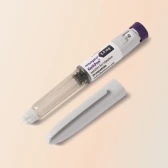
Each Mounjaro pen contains four doses. You use the same pen for four weekly injections, attaching a fresh needle each time.
Where to inject Mounjaro?
Mounjaro is a subcutaneous injection, which means it's injected into the fatty tissue just under your skin, not into a vein or muscle.
You can inject Mounjaro in three areas:
Stomach (abdomen): At least 5cm (2 inches) away from your belly button. This is the most popular injection site as it's easy to reach.
Front of your thighs: The upper, outer part of your thighs.

Back of your upper arm: You'll need someone else to help you inject in this area.

Injection sites to avoid:
- Within 5cm of your belly button
- Scar tissue, moles, birthmarks, or tattoos
- Bruised, tender, swollen, or red areas
- Stretch marks or sunburned skin
- Varicose veins
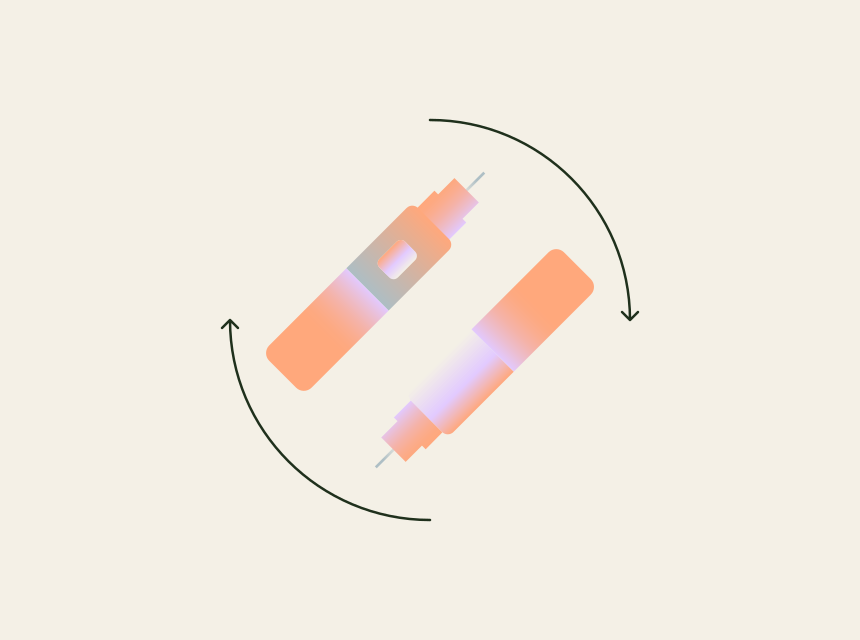
Why rotate injection sites?
You should use a different spot each week, even if you stay in the same general area (like your stomach). Injecting in the same exact spot repeatedly can cause the skin to thicken or harden, which makes it harder for the medication to absorb properly and may cause irritation.
How to inject Mounjaro: Step-by-Step
What you'll need:
- Your Mounjaro pen
- A new pen needle
- Alcohol swab
- Sharps disposal container
Before you start:
- Wash your hands thoroughly with soap and water
- Check the pen: Make sure it's in date, not damaged, and the liquid is clear or slightly yellow (not cloudy or discoloured)
- If stored in the fridge, you can let the pen sit at room temperature for 15 minutes (this can make the injection more comfortable)
Priming the pen (do this every time):
- Remove the pen cap and wipe the red inner seal with an alcohol swab
- Attach a new needle: Remove the paper tab, push the needle onto the pen, and twist until tight
- Remove both needle shields (keep the outer shield for later)
- Turn the dose knob until you hear two clicks and see a long line in the dose window
- Hold the pen upright (needle pointing up)
- Push the dose knob in and hold for 5 seconds. You should see "0" in the dose window and a tiny drop of liquid at the needle tip
Injecting:
- Turn the dose knob until "1" appears in the dose window
- Clean your chosen injection site with an alcohol swab
- Insert the needle straight into your skin at a 90-degree angle
- Press the dose knob all the way in until it stops
- When the dose window shows "0", count slowly to 5 before removing the needle
- Remove the pen from your skin
After injecting:
- A small drop of blood is normal. Gently press with a cotton ball if needed (don't rub)
- Put the outer needle shield back on, then unscrew and dispose of the needle in a sharps container
- Replace the pen cap and store the pen properly
How to store Mounjaro?
Proper storage keeps your Mounjaro effective and safe to use.

Storing unopened pens:
- Keep in the fridge at 2-8°C
- Store in original packaging
- Don't store in the fridge door (temperature fluctuates too much)
- Never freeze Mounjaro. If it freezes, throw it away
Storing opened pens:
- Can be kept in the fridge (2-8°C) OR
- At room temperature (up to 30°C) for up to 30 days
- Keep away from direct sunlight and heat
- Store out of reach of children
How long does Mounjaro last?
Unopened pens:
- In the fridge: Until the expiry date on the box (typically up to 24 months)
- At room temperature: 30 days maximum
Once opened:
- 30 days maximum, whether stored in the fridge or at room temperature
Set a reminder when you first use your pen so you don't accidentally use it past the 30-day mark.
When to throw Mounjaro away:
- It's past the expiry date
- It's been at room temperature for more than 30 days
- It's been exposed to temperatures above 30°C
- It's been frozen
- The liquid is cloudy, discoloured, or has particles in it
What is the Mounjaro "golden dose"?
The "golden dose" or "fifth dose" of Mounjaro refers to the small amount of liquid left in the Mounjaro pen after using your four prescribed doses. This topic has gained attention on social media, with some people wondering if they can use this leftover liquid as an extra dose.
Should you use the Mounjaro golden dose?
No. Using the fifth dose of Mounjaro is not safe and is strongly advised against by clinicians and Eli Lilly, the manufacturer.
Why is the Mounjaro golden dose not safe?
Risk of incorrect dosing: The leftover liquid is not a full, measured dose. You may underdose (making treatment less effective) or overdose (increasing the risk of severe side effects like nausea and vomiting).
Risk of infection: The Mounjaro pen expires 30 days after first use. After this time, sterility cannot be guaranteed. Attempting to extract leftover medication increases the risk of bacterial contamination and infection at the injection site.
Loss of effectiveness: Expired or improperly stored medication may not work as intended, reducing your weight loss results.
Why does the Mounjaro pen have leftover liquid?
Each Mounjaro pen contains slightly more liquid than needed for four doses. This overfill is intentional to ensure enough liquid for priming (the flow check you do before each injection) and compensation for small delivery variances.
What should you do instead of using the golden dose?
After using all four doses, dispose of your Mounjaro pen properly in a sharps container and move on to a new pen on your next injection date.
How long do you need to take Mounjaro?
Most people take Mounjaro for at least one year, with many continuing long-term to maintain their results.
Clinical trials show that people continue to lose weight throughout the first 72 weeks (around 18 months) of treatment. At the highest dose of 15mg, participants lost an average of 22.5% of their starting weight after 72 weeks. The best results are seen in those who stay on the medication long-term.
How long you need to take Mounjaro depends on:
- Your starting weight and how much weight you want to lose
- Your broader health goals, such as blood sugar control if you have type 2 diabetes
- Whether you plan to continue on a maintenance dose or stop after reaching your target weight
Why long-term treatment matters:
Weight loss medication works best when combined with lasting lifestyle changes. Taking Mounjaro long-term gives you time to build sustainable habits around food and activity that will help you maintain your results after stopping or transitioning to a lower maintenance dose.
At Voy, we support you throughout your journey to help you develop the habits that keep the weight off for good.
What is the maintenance dose?
Once you reach your goal weight, maintenance is the dose that allows you to maintain your weight loss without continuing to lose weight or regaining it.
At Voy, your maintenance dose is individualised. For some people, this might be 5mg or 7.5mg. For others, it could be 10mg or 12.5mg. The goal is to find the dose that:
- Keeps your appetite controlled
- Maintains your weight loss
- Has minimal side effects
- Fits your long-term health goals
Your Voy clinical team will work with you to determine when you've reached your target weight and what maintenance dose is right for you. This typically happens after you've been at a stable weight for several weeks and are ready to shift from active weight loss to weight maintenance.
Mounjaro side effects
Like all medications, Mounjaro can cause side effects, though not everyone experiences them. Most side effects are mild and temporary, typically improving within a few days to weeks as your body adjusts to the medication.
What are the most common Mounjaro side effects?
The most common side effects of Mounjaro affect the digestive system and usually occur when starting treatment or increasing your dose.
Very common side effects (may affect more than 1 in 10 people):
- Nausea
- Diarrhea
- Vomiting
- Constipation
- Stomach pain or discomfort
Common side effects (may affect up to 1 in 10 people):
- Indigestion
- Feeling tired or low energy
- Injection site reactions (redness, itching, or pain)
- Burping
- Gas or bloating
- Acid reflux or heartburn
- Dizziness
- Hair loss (usually temporary)
Side effects support at Voy
It's normal to experience side effects when you start taking Mounjaro or after increasing your dose. If you need support managing side effects, call our support line on 020 3912 9885 and press 2 to speak to a prescriber within minutes (available Monday to Friday, 9 AM to 5 PM).
Your Voy clinical team can:
- Provide advice on managing symptoms
- Prescribe treatment to help with side effects
- Adjust your dose to find the right balance
Who should not take Mounjaro?
Mounjaro is not suitable if you:
- Are under the age of 18
- Are trying to conceive, pregnant, or breastfeeding
- Are allergic to any of the ingredients in Mounjaro
- Have type 1 diabetes
- Have a personal or family history of thyroid cancer
- Have Multiple Endocrine Neoplasia Type 2
- Have severe digestive conditions such as Ulcerative Colitis, Crohn's disease, or gastroparesis
- Have a history of pancreatitis
- Have severe liver or kidney impairment
- Have gallbladder problems (unless your gallbladder has been removed)
- Have diabetic retinopathy
Medications that may interact with Mounjaro
Other weight loss medications: You should not take Mounjaro alongside other weight loss injections (like Wegovy or Saxenda) or orlistat. Using multiple weight loss medications together is not safe or recommended.
Diabetes medications: Mounjaro can interact with insulin and sulfonylureas (like gliclazide), increasing the risk of dangerously low blood sugar. If you're taking these medications, Mounjaro may not be suitable.
Oral contraceptives: Mounjaro can make oral contraceptive pills less effective. If you're taking the pill, you should use additional contraception (like condoms or an IUD) for 4 weeks after starting Mounjaro and for 4 weeks after each dose increase.
Other medications: Because Mounjaro slows stomach emptying, it may affect how your body absorbs other oral medications. Tell your clinician about all medications you're taking, including over-the-counter drugs and supplements.
What foods should you avoid on Mounjaro?
While there are no foods that directly interact with Mounjaro, certain foods can worsen side effects or slow your weight loss progress.
Foods that may increase nausea and digestive discomfort:
High-fat and fried foods like chips, fried chicken, burgers, and pastries can slow digestion further and worsen nausea, bloating, and stomach discomfort. These foods also tend to be high in saturated fats, which provide little nutritional value.
Spicy foods may irritate your stomach, especially if you're already experiencing nausea or reflux.
Foods that can slow weight loss:
High-sugar foods such as sweets, biscuits, cakes, and fizzy drinks cause blood sugar spikes and provide empty calories that don't keep you full.
Ultra-processed foods like ready meals, crisps, and processed meats are often high in calories, salt, and unhealthy fats while being low in nutrients that support weight loss.
What should you eat instead?
Focus on lean proteins (chicken, fish, eggs, tofu), whole grains, vegetables, and healthy fats like avocado and nuts. These foods support weight loss, keep you fuller for longer, and are gentler on your digestive system.
Everyone responds differently to Mounjaro. Keep a food diary during your first few weeks to identify which foods trigger your side effects. Tracking what you eat and how you feel helps you understand your personal triggers and adjust accordingly.
Can you drink alcohol on Mounjaro?
You can drink alcohol while taking Mounjaro, but it's generally advised to limit or avoid it.
Why alcohol may be problematic:
- Alcohol can worsen side effects like nausea and vomiting, especially when you first start treatment or increase your dose, and can also cause dehydration.
- Alcoholic drinks are high in calories and offer little nutritional value, which can slow your weight loss progress.
- If you have type 2 diabetes, alcohol can increase the risk of low blood sugar (hypoglycaemia), particularly if you're taking other diabetes medications alongside Mounjaro.
If you choose to drink:
- Avoid drinking in the first few weeks of treatment and during the week after each dose increase while your body adjusts to the medication
- Keep it minimal - try to drink only on special occasions rather than regularly
- Choose lower-calorie options like spirits with sugar-free mixers or dry wine instead of sugary cocktails or beer
- Stay hydrated by drinking water alongside alcohol