












Menopause rarely arrives as one clear, defining moment.
It’s a hot flush here. A “Hang on, why did I walk into this room?” there. A few months without a period, followed by a few months more.
This series of physical, cognitive and emotional changes (there are over 34 known symptoms of menopause) often feel disconnected from one another.
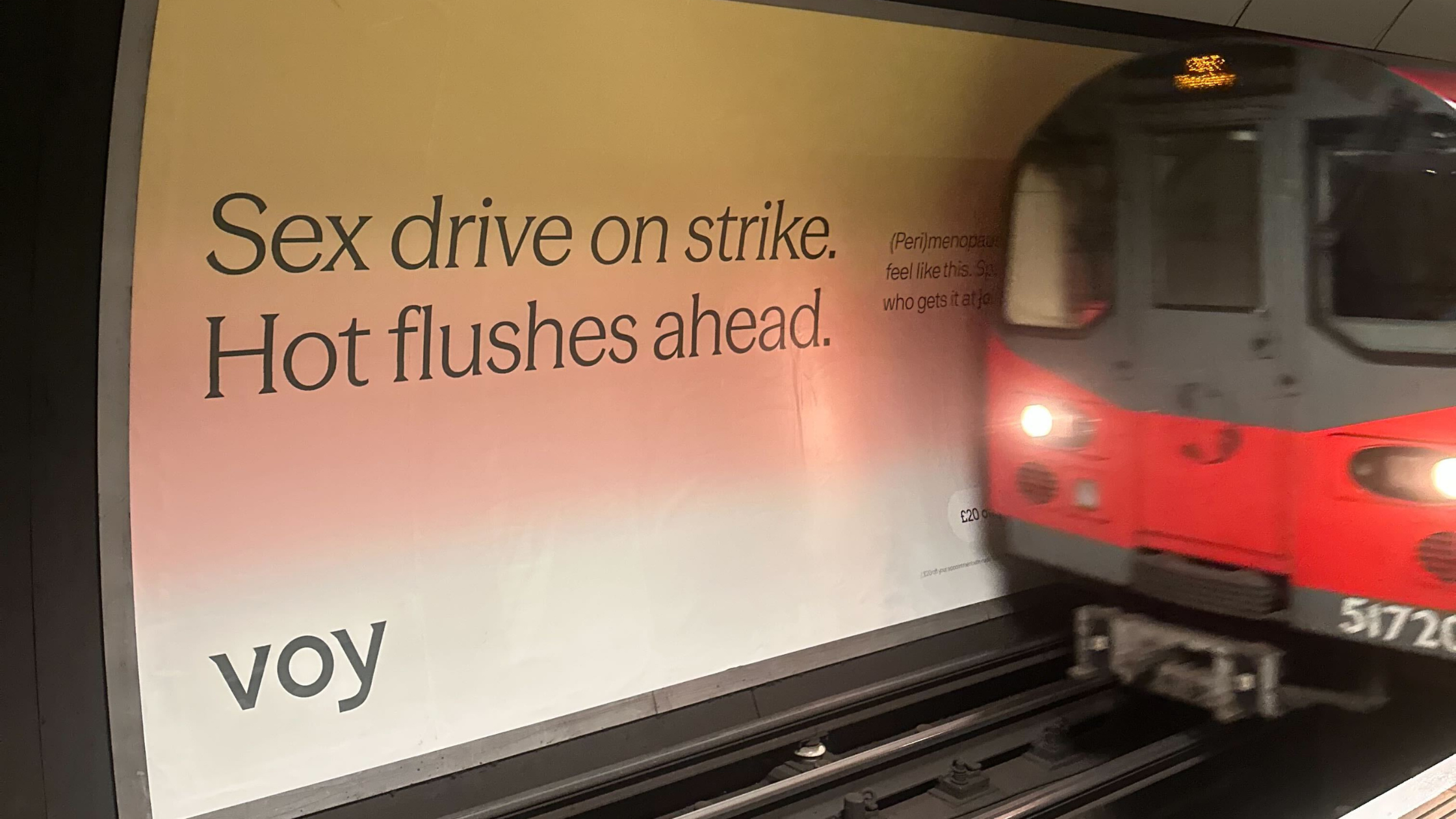
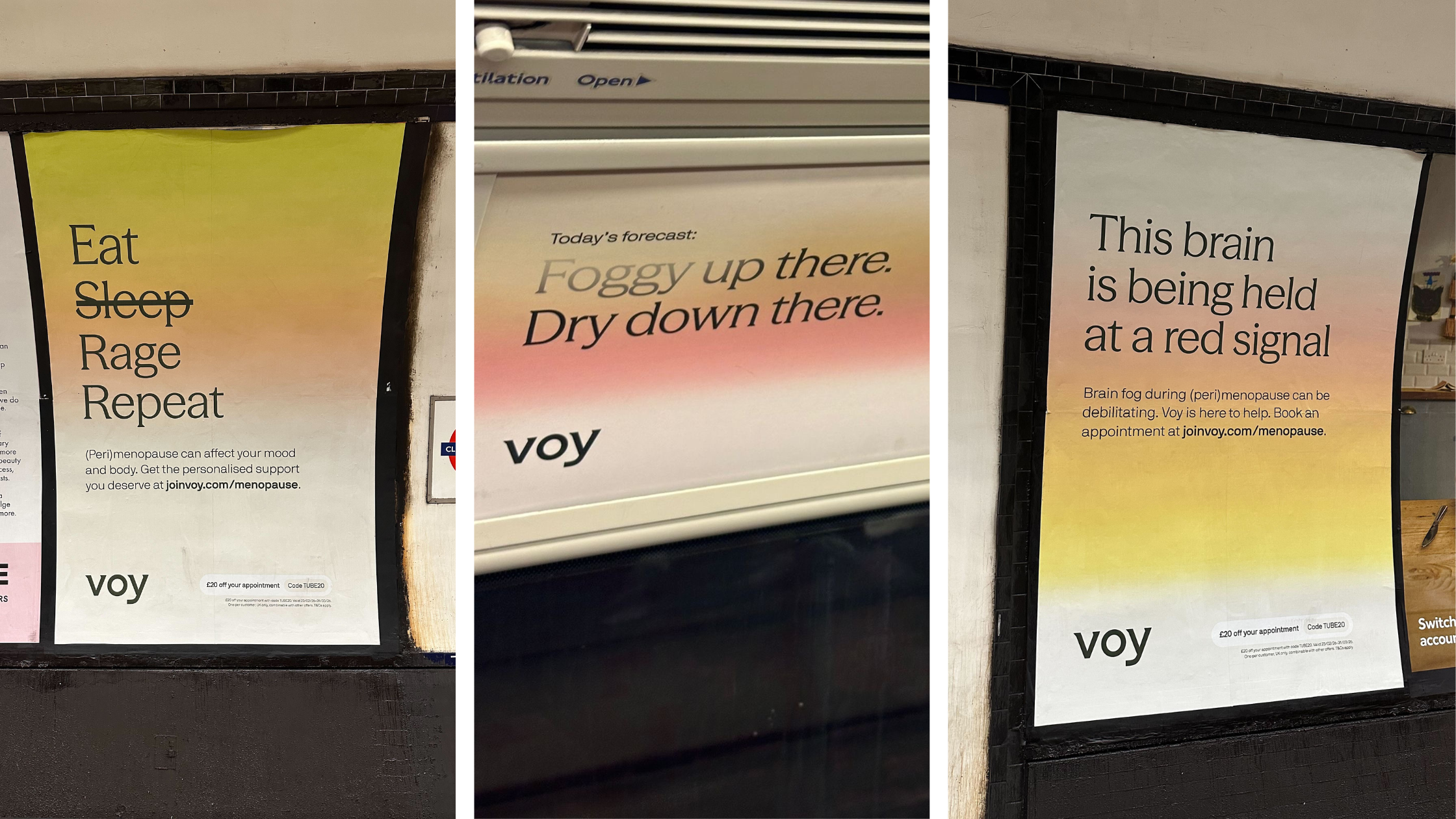
It’s this tension that sits at the heart of Voy’s latest London Underground campaign, now live at a station near you.
Because each symptom can be explained in isolation, it’s easy to miss the pattern (and even harder to trace it back to hormones). A bad night’s sleep gets blamed on stress. Brain fog feels like burnout. A loss of sex drive can feel too personal to talk about.
As a result, many women spend months, sometimes years, questioning themselves rather than understanding what might be happening physiologically.
In fact, our data shows that 45% of women say they waited too long before seeking help for their symptoms (Voy’s survey data, March 2025, sample size=2,000).
Meeting women where they are
Across the London Underground, we’re speaking to women in the language they already use. In group chats, late night Google searches and exasperated conversations.
The headlines are inspired by real stories from our community and social channels, reflecting the everyday experience of perimenopause and menopause.
In case you missed them:
- Eat,
sleep, rage, repeat - Sex drive on strike. Hot flushes ahead.
- This brain is being held at a red signal
- Like jet lag, but every day and you haven’t been away
- Foggy up there. Dry down there.
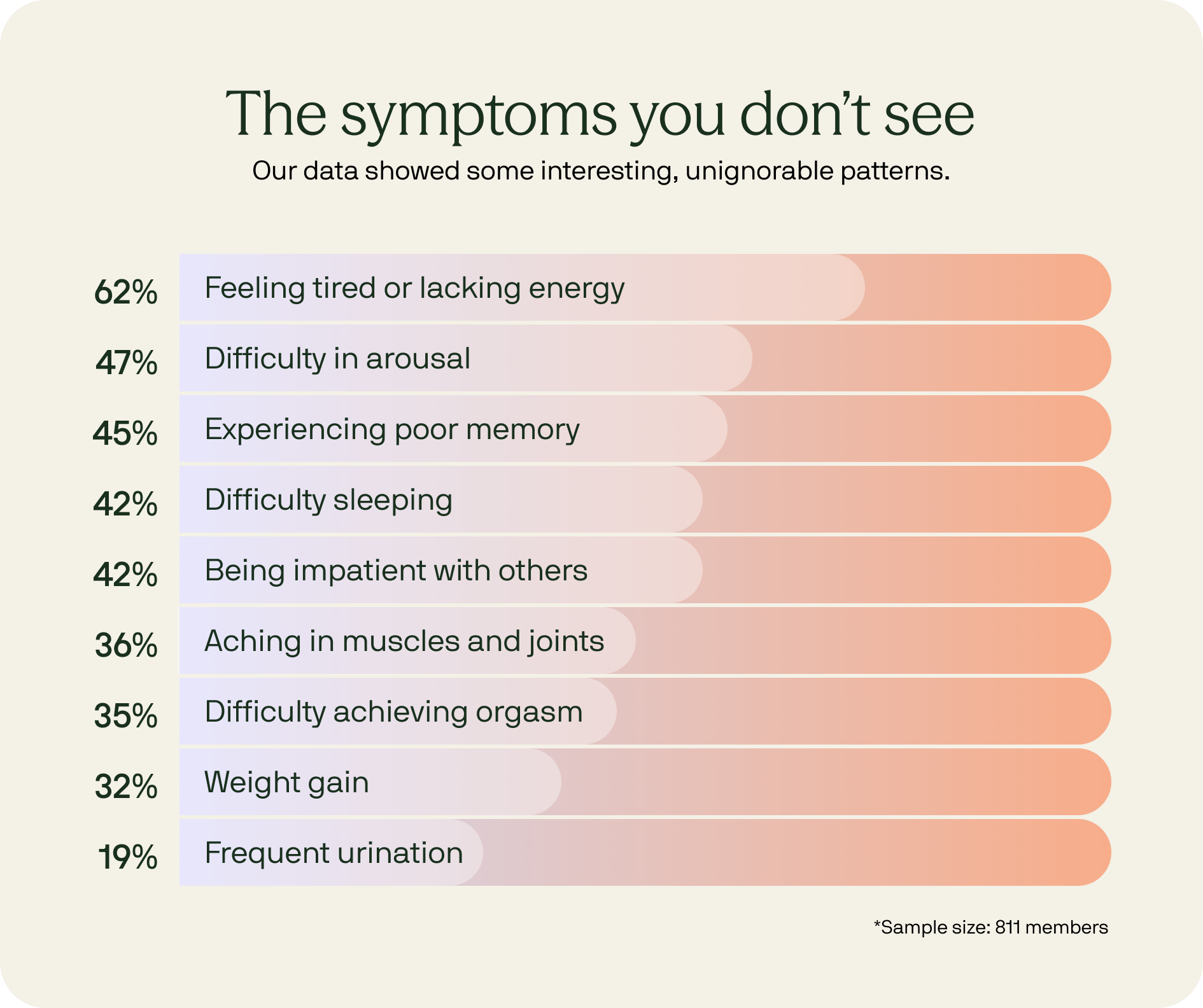
The symptoms you don’t see
When you think of menopause, you might think of hot flushes or night sweats. But the cognitive, emotional and intimate changes are often the ones that make every day feel impossible.
Our data (Voy patient internal data, February 2026, sample size=811) showed some interesting patterns, too significant to ignore. The symptoms women report being “very” or “extremely bothered” by include:
Some changes are particularly hard to talk about. Shifts in libido, changes in mood or vaginal dryness can make people feel like they’re not themselves, often feeling too personal to share. One Voy customer described it personally: “I was feeling really angry. I felt as though I was losing my mind… It’s really important to know there are places that specialise in menopause. I’m feeling like I’m getting back to me again.”
Let’s talk about sex
Some of the most emotionally loaded symptoms involve sexual wellbeing and intimacy.
Among Voy members seeking support specifically for sex drive (sample size: 301):
- 97% reported being less interested in sex than before
- 95% were less likely to initiate or respond to their partner
- 96% reported fewer erotic thoughts or fantasies
- 89% reported fewer orgasms than before
- 38% reported sex had become physically painful
Libido is often seen as a fixed, personal trait rather than a hormone-driven response. So when it changes, many women blame themselves instead of considering the biological factors.
Vaginal dryness are not dirty words
Some symptoms are still hard to talk about.
Vaginal dryness sits at the intersection of sexuality, intimacy and identity, and its impact goes far beyond the physical. It can affect our confidence, self-identity, relationships and connection.
Periods are finally out in the open (excellent work, Bodyform and Libresse). But vaginal dryness? Not so much. Women are expected to appear sexually confident while keeping their bodies’ experiences private, leaving symptoms isolating and unspoken.
It feels awkward. It feels personal. And that’s exactly why we should be talking about it.
By naming these symptoms directly, we can break stigma and normalise conversations that have been kept quiet for too long.
Care that feels personal, not clinical
We believe that menopause care should meet women where they are. Our doctors take the time to listen to your story, validate your experience and understand how symptoms are affecting your life.
- Start with a 45 minute online appointment
- Get prescribed treatments delivered discreetly to your door (for free)
- Make the most of unlimited, ongoing support from expert clinicians
We can help you go from feeling confused to feeling like yourself again. If you think you might be (peri)menopausal and want relief from your symptoms, take our symptom assessment or book an appointment with a British Menopause Society accredited doctor.